

The residential real estate industry is currently navigating a complex paradox where the demand for granular, high-quality data is surging just as the availability of that data is being restricted by privacy concerns and technological shifts. As artificial intelligence continues to reshape the landscape of digital information, a growing number of consumers and real estate professionals are opting to shield property data from the public eye. While these measures are intended to protect homeowner privacy and prevent the unauthorized training of Large Language Models (LLMs), they are creating significant hurdles for the appraisal profession, which serves as the bedrock of mortgage lending and market stability.
The tension between data privacy and market transparency has reached a critical juncture. For decades, the Multiple Listing Service (MLS) served as an open repository of historical data, allowing appraisers to compare properties with precision. However, a recent trend toward "private listings" or "office exclusives," combined with the systematic removal of interior photos after a sale, is leaving many valuation experts "flying blind." This shift is not merely a professional inconvenience; it represents a fundamental change in how real estate value is determined and communicated in the United States.
The Regulatory Shift: Understanding UAD 3.6 and Granular Reporting
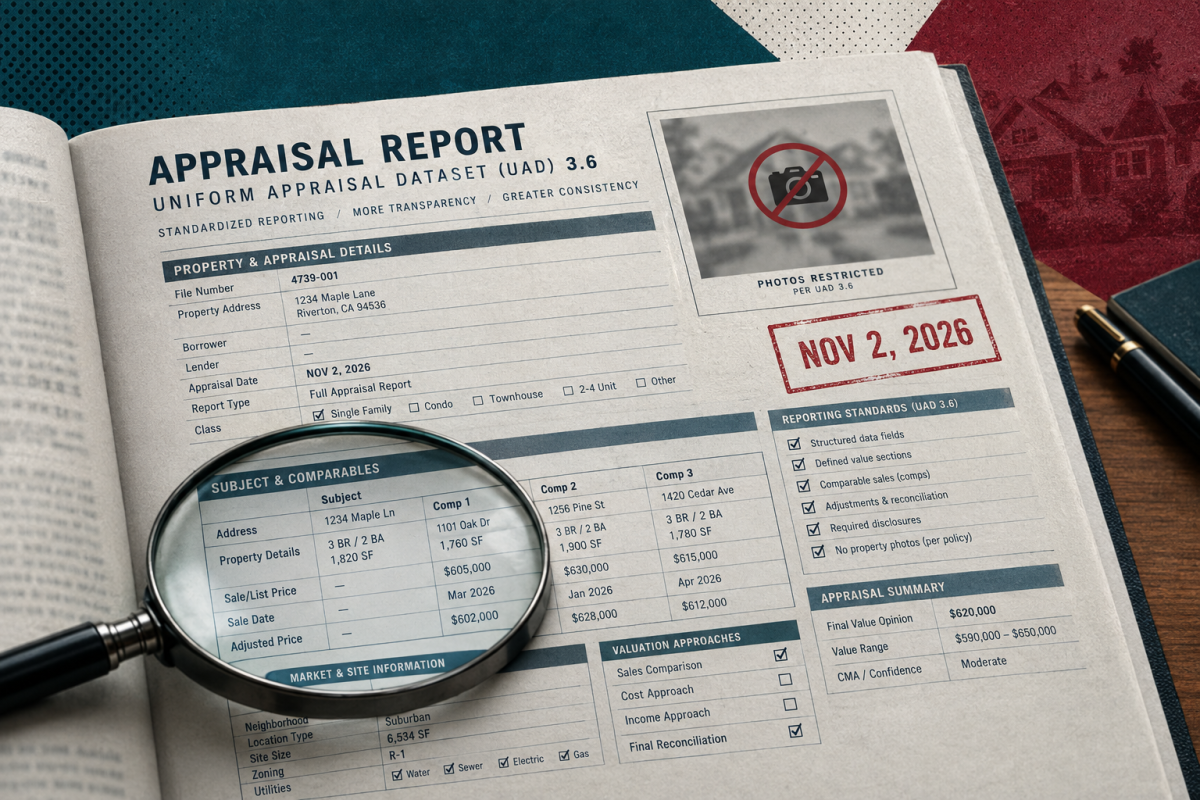
The timing of this data scarcity is particularly challenging due to new federal reporting requirements. On November 2, the industry will see the full implementation of the Uniform Appraisal Dataset (UAD) version 3.6. This update, spearheaded by Fannie Mae and Freddie Mac under the direction of the Federal Housing Finance Agency (FHFA), represents the most significant overhaul of appraisal reporting in over a decade.
Under the previous standards, appraisers often utilized free-form text boxes to describe the condition and quality of a home. They could provide narrative context, such as "the kitchen features high-end finishes consistent with a 2020 renovation." However, UAD 3.6 replaces much of this narrative with a highly structured, data-driven format. Appraisers are now required to select specific attributes from exhaustive dropdown menus for nearly every feature of a property. This includes high-resolution interior data, structural metrics, and specific quality ratings that leave little room for ambiguity.
The objective of UAD 3.6 is to create a more objective, machine-readable dataset that reduces bias and improves the speed of automated underwriting. Yet, the success of this system relies entirely on the appraiser’s ability to access the very data that is currently being withdrawn from the market. If an appraiser cannot view historical photos of a "comparable sale" to determine if its kitchen was renovated in 1975 or 2023, they cannot accurately fulfill the granular requirements of the new UAD forms.
The Artificial Intelligence Catalyst and Privacy Concerns
The primary driver behind the sudden withdrawal of data is the rapid advancement of artificial intelligence. In recent years, brokerages and homeowners have become increasingly wary of how listing data is harvested. Large Language Models and AI-driven valuation tools require massive amounts of data to function, often scraping images and descriptions from public portals without direct compensation to the listing agents or the homeowners.
In response, some high-end brokerages have encouraged "private exclusives," where properties are marketed within a closed network rather than being syndicated to public sites like Zillow or Realtor.com. This strategy serves two purposes: it protects the seller’s privacy and prevents the property from accumulating "days on market" (DOM) in the public record. A high DOM count is often viewed as a stigma that leads to lower offers, so by keeping the listing private until a contract is signed, agents can maintain a sense of exclusivity and price integrity.
Furthermore, consumers are increasingly requesting that portals remove interior photos immediately after a transaction closes. From a homeowner’s perspective, this is a matter of personal security and privacy; they do not want the layout of their home, the value of their belongings, or the location of their security systems visible to the general public. However, for an appraiser looking back six months later to use that home as a "comparable," the absence of those photos creates a vacuum of information.
The Appraiser’s Dilemma: Navigating Data Scarcity
For real estate appraisers, the removal of listing photos and the rise of off-market sales are more than just a nuisance—they are a threat to the credibility of their valuations. Desiree Mehbod, a Virginia-based appraiser, notes that private listing networks effectively "starve the open market of data transparency." When a home sells within a private network, critical details regarding interior condition, historical price adjustments, and true market exposure time are often hidden from the professionals who need them most.
Ryan Lundquist, a prominent appraiser based in Sacramento, echoes these concerns. He points out that "remodel" is a subjective term that can mean vastly different things depending on the decade. Without visual evidence, an appraiser cannot distinguish between a cosmetic refresh and a structural overhaul. This lack of clarity forces appraisers to make assumptions, which increases the risk of overvaluation or undervaluation, potentially leading to issues during the mortgage underwriting process.
The impact is also felt in the "time and money" equation of a real estate transaction. Frank Gregoire, an appraiser in Florida, explains that a diligent appraiser will not simply give up when data is missing. Instead, they must spend hours chasing down the agents involved in the transaction, making phone calls, and searching for alternative data sources. This additional labor inevitably leads to higher appraisal fees. In a market where homebuyers are already struggling with high interest rates and record-high home prices, an increase in closing costs further exacerbates affordability challenges.
The Role of MLSs in Balancing Privacy and Access
Multiple Listing Services (MLSs) are currently at the center of this tug-of-war. As the primary gatekeepers of property data, they are tasked with protecting the interests of their members (agents and brokers) and the privacy of consumers, while also ensuring that the market functions efficiently.
Several major MLSs, including the California Regional MLS (CRMLS), Canopy MLS, and Flexmls, have begun implementing tiered privacy controls. These policies allow for "media privacy," where interior photos are removed from public-facing internet data exchange (IDX) feeds but remain accessible within the internal MLS system for authorized professionals. This "walled garden" approach aims to satisfy the consumer’s desire for privacy while providing appraisers and agents with the historical records necessary to conduct accurate valuations.
The Council of MLSs (CMLS), a national trade group, is currently working on a set of "Best Practices" to help organizations navigate this balance. A spokesperson for the CMLS emphasized that consumer privacy and appraisal needs do not have to be "competing priorities." By establishing clear rules on how and when data is displayed, the industry can preserve the integrity of the historical record without exposing homeowners to unnecessary public scrutiny.
Chronology of the Real Estate Data Evolution
To understand the current crisis, it is helpful to look at the timeline of how real estate data has been managed over the last several decades:
- Pre-1990s: The "Big Book" Era. MLS data was distributed via physical books to member offices. Transparency was high among professionals but low for the general public.
- The Late 1990s – 2000s: The Digital Revolution. The birth of online portals began to democratize data. Appraisers moved from physical files to digital databases, significantly increasing efficiency.
- 2011: The introduction of the original Uniform Appraisal Dataset (UAD). This was the first major step toward standardizing appraisal data for Fannie Mae and Freddie Mac.
- 2020 – 2023: The AI Explosion. The rise of LLMs and sophisticated data-scraping tools prompted a defensive reaction from brokerages and privacy-conscious homeowners.
- 2024: The implementation of UAD 3.6 and the surge in private listings. The industry enters a period of "data friction," where regulatory requirements for more data clash with market trends toward less transparency.
Broader Implications and Public Trust
The long-term consequences of this data scarcity extend beyond the appraisal profession. If the marketplace moves toward a model where a substantial portion of listings are private and photos are deleted, the "open market" concept—upon which the American real estate system is built—could begin to erode.
Transparency is a key component of public trust in the housing market. When buyers and sellers can see what homes are selling for and in what condition, they can make informed decisions. A move toward "shadow inventory" and hidden data could lead to a fragmented market where only those with "insider" access can truly understand property values.
Furthermore, there is a risk that appraisers will be viewed not as independent experts, but as "forced data collectors." As Desiree Mehbod warned, if homeowners are forced to allow appraisers into their homes to collect the data that is no longer available online, it can create animosity. This friction at the "front door" of the transaction can complicate the closing process and create a negative experience for consumers.
Conclusion: Seeking a Sustainable Path Forward
The real estate industry is at a crossroads. The demand for data-driven precision in valuations is higher than ever, yet the traditional sources of that data are becoming less reliable. To protect the stability of the housing ecosystem, stakeholders—including MLSs, brokerages, appraisers, and regulators—must collaborate on a framework that respects consumer privacy without sacrificing the transparency required for accurate valuations.
The successful implementation of UAD 3.6 will depend on the industry’s ability to maintain a robust, internal historical record that remains accessible to those who provide the essential service of valuation. Without a shared commitment to data integrity, the cost of buying a home will likely continue to rise, and the accuracy of the values that underpin the nation’s mortgage debt may be called into question. As the industry moves further into the age of AI, the challenge will be to ensure that technology serves to clarify the market, rather than obscure it.
