

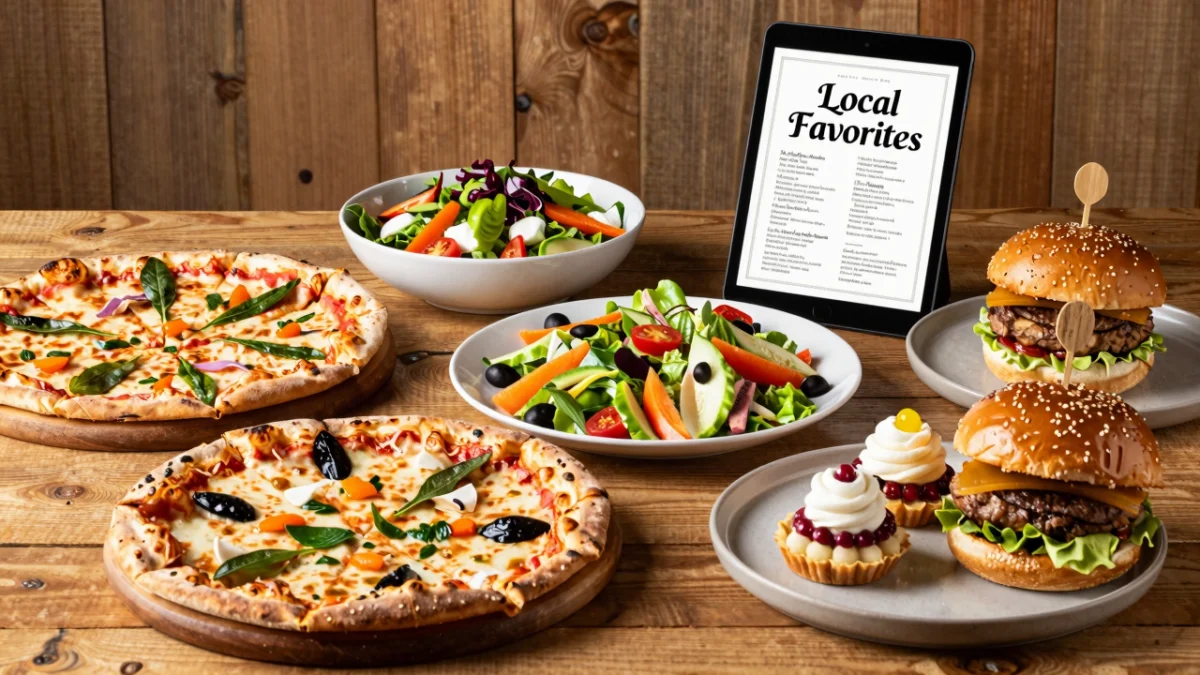
The Evolution of the Local Food Franchise Market
The trajectory of the food franchise industry has undergone a significant transformation over the last decade. Historically dominated by traditional fast-food "burgers and fries" models, the market has pivoted to accommodate a more sophisticated consumer base. The rise of the "fast-casual" segment—characterized by higher-quality ingredients and a more inviting atmosphere than traditional fast food—has bridged the gap between convenience and quality.

Industry analysts point to the 2019-2023 period as a pivotal era for operational shifts. During this time, delivery-centric models and in-house logistics became mandatory rather than optional. Statistics from 2019 showed that 63% of urban restaurant traffic was driven by delivery services; today, that figure has stabilized at an even higher rate, prompting franchises like Domino’s and Tropical Smoothie Cafe to invest heavily in proprietary tech stacks to maintain direct relationships with their customers.
Health-Conscious Vending and the Low-Overhead Model
One of the most notable shifts in the franchise landscape is the emergence of health-focused vending solutions. Traditional vending, long associated with sugary snacks and processed goods, is being disrupted by companies like Healthier 4U Vending. This model appeals to entrepreneurs seeking a semi-passive income stream with a relatively low barrier to entry.

With a minimum cash requirement of approximately $53,000, health-focused vending allows owners to bypass the high labor costs and real estate complexities associated with traditional restaurants. These machines are increasingly placed in high-traffic, wellness-oriented locations such as gyms, corporate offices, and schools. The growth in this sector is fueled by a broader societal shift toward "functional snacking," where consumers look for protein-rich, low-sugar, or organic options on the go. For the franchisee, success in this niche depends heavily on location scouting and the ability to maintain a fresh, rotating inventory that reflects local dietary preferences.
The Breakfast Boom and Portable Nutrition
The breakfast and snack segments have emerged as some of the fastest-growing categories in the industry. Current market research reveals that 83% of consumers eat breakfast regularly, with 35% of those individuals purchasing their morning meal from a commercial establishment at least once a week. This demand has birthed specialized concepts like EggBred, which focuses on gourmet breakfast sandwiches, and Toastique, which combines the aesthetic appeal of gourmet toast with the nutritional benefits of cold-pressed juices.

The appeal of these franchises lies in their "daypart" efficiency. Unlike full-service restaurants that must manage lunch and dinner rushes, breakfast-centric models often operate with shorter hours while maintaining high margins. Furthermore, the "all-day breakfast" trend remains potent, with 70% of consumers expressing a desire for breakfast items outside of traditional morning hours. This flexibility allows franchisees to maximize kitchen utility and cater to a diverse demographic, from early-morning commuters to late-afternoon snackers.
Strategic Entry Points in the Pizza Sector
The pizza industry remains a staple of the American franchise economy, valued for its high profit margins and operational simplicity. However, the market has bifurcated into distinct categories: value-driven, premium/artisan, and community-centered models.

For budget-conscious entrepreneurs, Papa Murphy’s Take ‘N’ Bake Pizza offers a unique value proposition. By requiring customers to bake the pizza at home, the franchise significantly reduces its footprint and equipment costs, leading to a lower initial investment requirement of around $125,000. In contrast, Jet’s Pizza has capitalized on the regional trend of Detroit-style deep-dish pizza, requiring an investment between $300,000 and $400,000 but offering strong brand loyalty and a distinct product differentiation.
Little Caesars continues to dominate the value segment with a minimum cash requirement of $250,000, leveraging its "Hot-N-Ready" model to cater to time-sensitive consumers. Meanwhile, brands like Pizza Factory emphasize a community-first approach, often thriving in smaller markets where they can serve as a local hub. The investment for a Pizza Factory location typically ranges from $150,000 to $250,000.

High-Performance Heavyweights: Chick-fil-A and Raising Cane’s
When discussing profitability, Chick-fil-A remains the gold standard of the industry. The brand boasts an average unit volume (AUV) of $7.5 million—a figure that dwarfs many of its competitors. However, the path to ownership is notoriously difficult. While the initial franchise fee is a low $10,000, Chick-fil-A’s selection process is one of the most rigorous in the world, with thousands of applicants vying for a handful of spots. It is important to note that Chick-fil-A operators do not own the equity in the business; they act as "operators" who share in the profits, a model that ensures high operational standards but limits long-term asset appreciation for the individual.
Raising Cane’s Chicken Fingers represents another high-growth model, though it relies heavily on corporate-owned stores with limited franchising opportunities in certain regions. Its success is attributed to a simplified menu that maximizes speed and quality, reducing the complexity of supply chain management and staff training.

The Luxury Dessert and Beverage Niche
As consumers look for "affordable luxuries," the dessert and beverage segment has seen a surge in interest. Crumbl Cookies has become a cultural phenomenon by utilizing a rotating weekly menu and a sophisticated social media strategy to drive "fear of missing out" (FOMO) among its customer base. The model focuses on high margins and low labor costs compared to full-service dining.
In the beverage space, Travelin’ Toms Coffee Truck provides a mobile alternative to the traditional coffee shop. With an entry point as low as $10,000 for certain mobile configurations, it allows entrepreneurs to bring premium coffee to events, festivals, and office parks, bypassing the high rent costs of stationary cafes. For those interested in a more experiential dessert model, Sloan’s Ice Cream offers a luxury environment that justifies premium pricing, focusing on the "experience" of dining as much as the product itself.

Financial Analysis: Investment, ROI, and Payback Periods
Prospective franchisees must conduct rigorous financial due diligence before committing to a brand. Investment costs in the food sector vary wildly:
- Fast-Casual/Specialized Breakfast (e.g., EggBred): $80,000 – $200,000.
- Health-Focused Vending: $50,000 – $100,000.
- Mid-Tier Pizza/Mediterranean (e.g., The Great Greek): $300,000 – $750,000.
- Premium Fast Food: $1 Million+.
A critical metric for investors is the cash-on-cash return, which in the food industry typically ranges between 20% and 35%. A healthy franchise should aim for a payback period—the time it takes to recoup the initial investment—of two to four years. Brands with high AUVs, such as QDOBA (exceeding $2.3 million), often provide the most robust path to these returns, provided the franchisee can manage labor and food costs effectively.

Broader Impact and Industry Implications
The growth of local food franchises has significant implications for local economies and the broader food supply chain. By providing a structured path to business ownership, these franchises facilitate wealth creation at the local level. However, the industry faces headwinds, including rising labor costs, fluctuating commodity prices, and the increasing cost of real estate.
To mitigate these risks, many modern franchises are leaning into automation. From self-ordering kiosks to AI-driven inventory management, technology is becoming the silent partner in the kitchen. Furthermore, the "ghost kitchen" and "dual-brand" trends—where two brands share a single kitchen space—are being explored as ways to maximize square footage and reduce overhead.

For the aspiring entrepreneur, the conclusion is clear: success in the local food franchise market is no longer just about the food. It is about selecting a brand that aligns with modern consumer behaviors—specifically the demand for health, speed, and digital accessibility—while maintaining a disciplined focus on the financial metrics that ensure long-term sustainability. By researching established players like Tropical Smoothie Cafe or emerging stars like Jeff’s Bagel Run, and by consulting with existing owners to understand the day-to-day realities of the business, investors can position themselves to thrive in an increasingly competitive but rewarding industry.
