

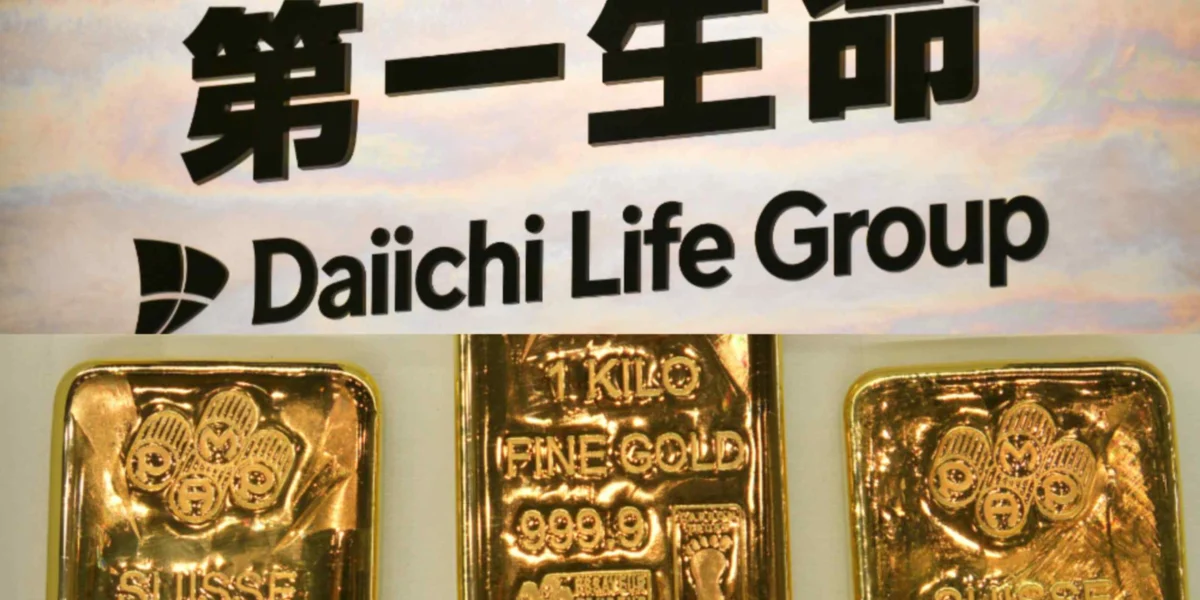
TOKYO – Daiichi Life Insurance announced on Thursday its strategic pivot to include gold in its investment portfolio, a significant diversification move aimed at mitigating the escalating threats of rising inflation and a volatile global economic landscape. This development marks a notable departure from the insurer’s traditional allocation strategies, signaling a proactive approach to safeguarding its substantial assets under management. The company, which was managing an impressive $219.3 billion at the close of June, has set an ambitious target for gold to constitute 1% of its total assets under management. This strategic allocation, while seemingly modest in percentage, represents a considerable investment in a historically stable asset class, reflecting a growing concern among institutional investors about the sustainability of current economic conditions.
A Shift in Investment Philosophy
The decision by Daiichi Life to invest in gold is not an isolated incident but rather a reflection of a broader trend observed across the financial industry, particularly among insurance companies and pension funds. These institutions, tasked with long-term financial security for their policyholders and beneficiaries, are increasingly seeking robust strategies to counter inflationary pressures that erode the purchasing power of traditional fixed-income assets. Gold, with its intrinsic value and historical performance as a store of wealth during periods of economic uncertainty, is emerging as a favored hedge.
For Daiichi Life, this move represents a calculated step to enhance the resilience of its investment portfolio. The insurer’s primary objective is to protect its capital and ensure its ability to meet long-term liabilities. In an environment characterized by persistent supply chain disruptions, geopolitical tensions, and expansive fiscal and monetary policies, inflation has become a more entrenched concern than previously anticipated. Traditional investments in government bonds, while offering a degree of safety, have seen their real yields decline significantly, and in some cases, turn negative after accounting for inflation. Equities, while offering growth potential, are susceptible to market downturns and economic shocks.
The insurer’s stated goal of allocating 1% of its assets to gold suggests a deliberate strategy to incorporate a non-correlated asset that can potentially appreciate when other asset classes falter. This diversification is crucial for managing downside risk and preserving capital. The sheer scale of Daiichi Life’s assets under management means that even a 1% allocation translates into a substantial investment, underscoring the seriousness with which the company is approaching its risk management objectives.
Historical Context and the Appeal of Gold
The allure of gold as a safe-haven asset is deeply rooted in history. For millennia, gold has been recognized for its scarcity, durability, and intrinsic value, making it a reliable store of wealth. Its performance often diverges from that of stocks and bonds, meaning it can act as a buffer during periods of market stress. During times of high inflation, the value of fiat currencies tends to decline, while gold’s price has historically tended to rise, as investors seek to preserve their wealth.
The current economic climate, marked by a confluence of factors, has amplified gold’s appeal. The COVID-19 pandemic triggered unprecedented government stimulus packages and central bank interventions, injecting vast sums of liquidity into the global economy. While these measures helped avert a deeper economic crisis, they also fueled concerns about long-term inflation. Furthermore, the ongoing geopolitical conflicts, particularly in Eastern Europe, have exacerbated supply chain issues and contributed to a surge in commodity prices, including energy and food, further stoking inflationary pressures.
In this context, Daiichi Life’s decision to invest in gold can be viewed as a preemptive measure. By allocating a portion of its portfolio to gold, the insurer is hedging against the possibility of sustained inflation and potential economic instability. This strategic allocation aims to provide a degree of stability and capital preservation that may be difficult to achieve through traditional asset classes alone.
Supporting Data and Market Trends
The investment in gold by Daiichi Life aligns with a broader trend observed among institutional investors globally. According to the World Gold Council, central banks have been significant net purchasers of gold in recent years, signaling a renewed interest in the precious metal as a reserve asset. In 2022, central bank gold purchases reached a record high, continuing a trend that has persisted into 2023. This collective action by central banks underscores a global recognition of gold’s role in diversifying reserves and hedging against economic uncertainties.
For insurance companies like Daiichi Life, the rationale for holding gold extends beyond reserve diversification. It is about actively managing the risk-return profile of their investment portfolios to ensure long-term solvency. Insurers operate on long-term liabilities, meaning they need to generate consistent returns over extended periods while minimizing volatility. Gold’s unique characteristics, particularly its low correlation with other major asset classes, make it an attractive component for achieving this balance.
While gold does not generate income in the form of dividends or interest, its potential for capital appreciation during periods of economic stress can offset losses in other parts of the portfolio. The 1% target for Daiichi Life is a prudent approach, allowing the company to gain exposure to gold’s hedging benefits without over-allocating and potentially missing out on gains in other growth-oriented assets. This strategic allocation is likely to be managed actively, with adjustments made based on evolving economic conditions and market outlooks.
Timeline and Chronology of the Decision
While the announcement was made on Thursday, October 22, 2026, the decision-making process for such a significant strategic shift likely spanned several months, if not longer. Insurers, by their nature, are highly regulated and operate under strict risk management frameworks. Any deviation from established investment strategies requires thorough analysis, board approval, and regulatory compliance.
Hypothetical Chronology:
- Early 2025: Daiichi Life’s investment committee begins to observe and analyze persistent inflationary trends and increasing global economic volatility. Initial discussions about diversifying beyond traditional assets commence.
- Mid-2025: A dedicated research team is tasked with evaluating alternative asset classes, including gold, as potential hedges. Extensive modeling and scenario analysis are conducted to assess gold’s historical performance during inflationary periods and market downturns.
- Late 2025: Preliminary findings suggest that a strategic allocation to gold could enhance portfolio resilience. The investment committee initiates discussions with senior management and the board of directors.
- Early 2026: Formal proposals are developed, outlining the rationale, target allocation, and risk management framework for incorporating gold into the investment portfolio. Regulatory consultations may also take place during this phase.
- Mid-2026: The board of directors reviews and approves the proposed investment strategy. Internal operational adjustments and the selection of custodians and trading partners for gold are initiated.
- Late 2026 (leading up to October 22): The initial phase of gold investment is executed, with the company beginning to acquire the precious metal to reach its target allocation.
- October 22, 2026: Daiichi Life publicly announces its investment in gold and its strategic objectives.
This hypothetical timeline illustrates the rigorous and systematic approach typically adopted by large financial institutions before implementing such a significant investment strategy.
Official Statements and Inferred Reactions
While the official announcement from Daiichi Life Insurance provided the core information, deeper insights can be inferred from the company’s stated objectives and the broader industry context.
Daiichi Life’s Stated Rationale: "Daiichi Life Insurance on Thursday said it has begun investing in gold as it diversifies beyond stocks and bonds to hedge rising inflation and other risks."
This statement clearly articulates the primary drivers: inflation hedging and diversification against "other risks." The term "other risks" is broad and could encompass geopolitical instability, potential currency devaluations, or unexpected economic shocks.
Inferred Reactions from Analysts and Industry Peers:
Financial analysts following the insurance sector are likely to view this move as a prudent and forward-thinking strategy. They would likely highlight:
- Proactive Risk Management: Analysts will commend Daiichi Life for its proactive approach to risk management in a complex economic environment.
- Diversification Benefits: The move is seen as a positive step towards enhancing portfolio diversification, which is a cornerstone of sound investment management.
- Industry Trend Alignment: Daiichi Life’s decision aligns with a broader trend of institutional investors re-evaluating their asset allocations in response to global economic shifts. This suggests that other similar institutions might follow suit.
- Potential for Improved Risk-Adjusted Returns: While not explicitly stated, the inclusion of a non-correlated asset like gold could potentially lead to improved risk-adjusted returns over the long term, provided the allocation is managed effectively.
Potential Reactions from Policyholders:
For policyholders, this news should be viewed positively. It indicates that their insurer is actively working to protect the financial strength of the company, which is crucial for its ability to meet future claims and obligations. A financially robust insurer provides greater security and peace of mind.
Broader Impact and Implications
Daiichi Life’s investment in gold has several broader implications for the financial markets and the insurance industry:
- Increased Demand for Gold: As more institutional investors consider or implement similar strategies, the demand for physical gold and gold-backed financial products could increase. This could, in turn, influence gold prices.
- Benchmark Shift for Insurers: This move might encourage other Japanese insurance companies to review their own investment strategies. If Daiichi Life’s approach proves successful, it could set a new benchmark for asset allocation within the sector.
- Regulatory Scrutiny: While likely approved, the move might attract closer scrutiny from financial regulators, particularly concerning the valuation, custody, and risk management of gold holdings. Regulators are keen to ensure that such unconventional investments do not jeopardize the solvency of insurance companies.
- Impact on Traditional Asset Classes: A significant shift of capital towards gold could, over time, have a marginal impact on the liquidity and performance of traditional asset classes, although a 1% allocation is unlikely to cause major market dislocations on its own.
- Enhanced Financial Resilience: Ultimately, the primary implication is the enhanced financial resilience of Daiichi Life. By diversifying its holdings, the company is better positioned to navigate economic downturns, inflationary pressures, and unforeseen market events, thereby securing its long-term viability and its commitments to policyholders.
In conclusion, Daiichi Life Insurance’s strategic decision to incorporate gold into its investment portfolio represents a significant and well-considered response to the evolving economic landscape. It underscores a commitment to robust risk management, proactive diversification, and the long-term security of its policyholders in an era of increasing uncertainty. This move, while representing a modest percentage of its total assets, signals a powerful message about the evolving strategies of major financial institutions in safeguarding capital and navigating global economic complexities.
