

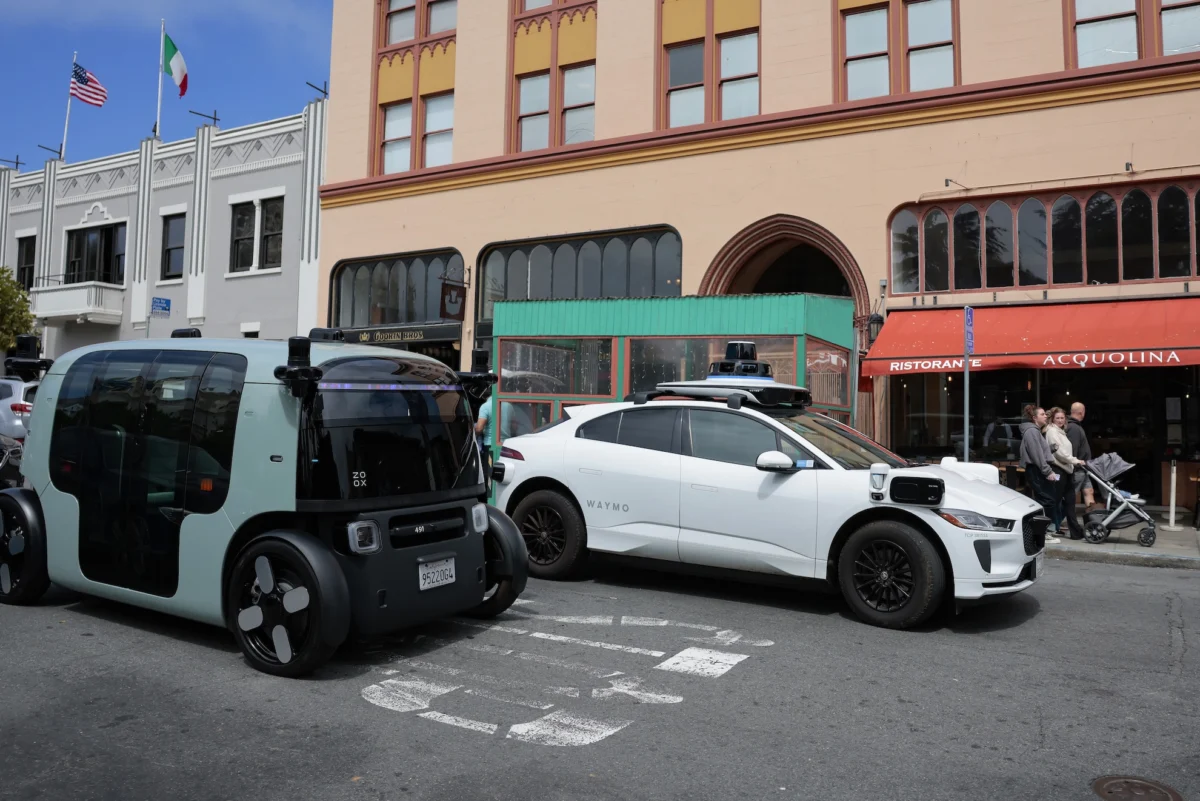
California Governor Gavin Newsom this week signed into law Senate Bill 1246, a pivotal piece of legislation poised to reshape the operational landscape for autonomous vehicles (AVs) across the state. The new law, effective July 2028, directly addresses a growing concern regarding the safety and responsiveness of robotaxis, particularly their interference with emergency services. This move comes as the Golden State, a major testing ground for autonomous technology, navigates the complex balance between fostering innovation and safeguarding public welfare amidst a burgeoning robotaxi presence.
The rapid proliferation of robotaxis from companies like Waymo and Cruise has transformed urban centers, notably San Francisco, where hundreds of these driverless vehicles are now a common sight. While often operating seamlessly, their deployment has not been without incident. TechCrunch Mobility, among other outlets, has extensively documented numerous instances where robotaxis have stalled in traffic, obstructed crime scenes, and hindered first responders. In several reported cases, emergency personnel have been compelled to manually move disabled AVs, diverting critical resources and potentially jeopardizing emergency response times. These disruptions, occurring in the nascent stages of the robotaxi era, underscore the urgent need for a robust regulatory framework, which SB 1246 aims to provide.
Key Provisions of Senate Bill 1246
Senate Bill 1246 introduces a comprehensive set of rules designed to enhance the safety, reliability, and accountability of autonomous vehicles. The legislation mandates several key requirements for AV technology companies, including industry leaders such as Tesla, Waymo, and Zoox:
- Local, On-the-Ground Support: Companies must provide immediate, local, on-the-ground support when their robotaxis encounter problems. This provision directly tackles the issue of remote assistance proving insufficient in critical situations, ensuring that physical intervention can occur swiftly.
- Penalties for Obstruction: The law establishes clear penalties for robotaxis that block police, firefighters, or other emergency responders for more than 30 minutes. This measure aims to deter prolonged obstructions that can have severe consequences in emergency scenarios.
- U.S.-Based Remote Drivers: Autonomous vehicle developers are now restricted to employing remote drivers who are based in the United States and hold a valid U.S. driver’s license. This stipulation enhances oversight and ensures a consistent standard of training and accountability for human operators providing remote assistance.
- Notification of Local Jurisdictions: Companies must promptly notify cities, towns, and other local jurisdictions about the precise location and status of their vehicles during system-wide failures. This improves situational awareness for local authorities and facilitates coordinated responses.
- Local Incident Technicians: The law requires the provision of "local incident technicians" who are equipped and trained to assist with AV accidents and obstructions. These technicians will serve as a dedicated resource to manage AV-related incidents efficiently and safely.
While the Department of Motor Vehicles (DMV), the primary regulator for autonomous vehicles in California, will be responsible for finalizing the intricate details and implementation guidelines, the core tenets of SB 1246 are clear. The legislation seeks to create a more accountable environment for AV operators, shifting some of the burden of incident management from public services back to the companies deploying the technology.
Background and Rationale for New Regulations
The journey to SB 1246 has been paved with increasing public and legislative pressure. Incidents involving autonomous vehicles have become more frequent and visible as deployments scale up. For example, in August 2023, San Francisco saw a significant increase in AV operations, leading to a surge in reported incidents, including vehicles blocking emergency lanes and driving into active construction zones. These events highlighted a critical gap in existing regulations, where the responsibility for managing unexpected AV failures often fell to untrained civilians or overwhelmed first responders.
First responder organizations, including police and fire departments, have been vocal advocates for clearer protocols and greater accountability from AV companies. They have pointed to the potential for catastrophic delays in medical emergencies or fire suppression due to incapacitated or errant robotaxis. Governor Newsom’s signing of SB 1246 signals a recognition of these concerns at the highest state level, aiming to proactively address potential safety hazards before the anticipated "next impending wave" of robotaxis fully lands on California streets. The law serves as a legislative acknowledgment that while AV technology promises efficiency and safety benefits, its deployment must be accompanied by robust safeguards and clear lines of responsibility.

Broader Implications and Future Outlook
The enactment of SB 1246 carries significant implications for the autonomous vehicle industry, not just within California but potentially nationwide. For AV companies operating in California, the law will necessitate adjustments to their operational models, requiring increased investment in local support infrastructure, training for incident technicians, and potentially a re-evaluation of their remote operations strategies. While this may entail additional costs, it is also an opportunity for these companies to build greater public trust and demonstrate a commitment to safety and responsible deployment.
The question now arises: will other states follow California’s lead? Given California’s pioneering role in technology and regulation, its legislative actions often set precedents. States like Arizona and Texas, which have also seen significant AV testing and deployment, may look to California’s framework as a model for their own regulatory efforts. The alternative is for the federal government to weigh in with a national standard, a move that has been slow to materialize, leaving a patchwork of state-level regulations in its wake. While SB 1246 may not entirely eliminate all incidents, it is widely expected to significantly reduce chaos, improve response coordination, and elevate the level of accountability when autonomous vehicle disruptions do occur. It represents a critical step towards maturing the regulatory environment for a technology that is rapidly becoming an integral part of modern transportation.
Beyond Regulation: Key Developments in Mobility and AI
The legislative developments in California unfold against a backdrop of continuous innovation and significant financial activity across the broader mobility and artificial intelligence sectors. Companies are not only grappling with regulatory challenges but also pushing boundaries in electric vehicles, autonomous trucking, drone delivery, and space exploration.
Significant Deals Shaping the Future of Transportation
Investment continues to flow into companies developing sustainable and autonomous transportation solutions:
- Harbinger and FedEx: EV startup Harbinger secured a substantial $300 million deal to supply FedEx with 2,000 of its electric trucks. This partnership highlights FedEx’s commitment to electrifying its vast logistics network and Harbinger’s emergence as a key player in the commercial EV segment. The deal underscores the growing demand for electric fleet solutions as companies aim to reduce their carbon footprint and operational costs.
- HyperGuest’s Funding Round: Israeli travel tech startup HyperGuest successfully raised $25 million from AMI, the investment arm of Apax Partners. This investment indicates continued confidence in technology solutions aimed at optimizing the travel and hospitality industry, likely focusing on enhanced guest experiences and operational efficiencies.
- REGENT Craft’s Expanded Collaboration: REGENT Craft, a developer and manufacturer of all-electric Seagliders, extended its collaboration with the U.S. Marine Corps Warfighting Lab. This expanded contract, now valued at $19.25 million, signifies the military’s interest in advanced, sustainable maritime transportation solutions, particularly for logistics and rapid deployment scenarios.
- Quartermaster’s Series B: Arlington, Virginia-based maritime intelligence startup Quartermaster closed a $140 million Series B round. The funding, with $100 million from Insight Partners, Overmatch Ventures, and First Round Capital, and an additional $40 million debt facility from Stifel, will fuel the growth of its intelligence platforms critical for maritime operations and security.
- Voltaback’s European Expansion: French fleet management software startup Voltaback raised €2.8 million from European investment fund Serena. This capital injection will support Voltaback’s efforts to scale its electric vehicle (EV) charging reimbursement solutions across Europe, addressing a crucial pain point for businesses managing EV fleets.
Autonomous Driving and Robotics: Industry Spotlights
The race to achieve fully autonomous operation and integrate AI into physical systems continues unabated:

- Aurora’s Ambitious Trucking Targets: Aurora, a prominent autonomous trucking company, recently declared its intention to deploy 30,000 driverless trucks on the road by the end of 2030. While this ambitious target has raised eyebrows, CFO David Maday has articulated the company’s strategy, emphasizing its technological advancements and strategic partnerships as foundations for achieving this scale.
- Kodiak’s Partnership with Ikea: Kodiak, another leader in autonomous trucking, announced a partnership with furniture giant Ikea. Later this year, Kodiak will commence driverless deliveries of Ikea products on a 219-mile stretch of Interstate 45 between Houston and Dallas, operating without a human safety driver in the cab. This milestone signifies a significant step towards commercializing autonomous freight logistics on public highways.
- DoorDash Air’s Drone Strategy: DoorDash provided further insights into its burgeoning drone delivery business, DoorDash Air. The company detailed its autonomous aircraft and its unique ground-based systems approach, suggesting a strategy that integrates aerial delivery with existing logistical infrastructure to enhance speed and efficiency in last-mile delivery.
- Tesla’s Dual Identity and Future Investments: Tesla continues to navigate its identity as both a leading electric vehicle manufacturer and an aspiring AI and robotics powerhouse. One year after Elon Musk unveiled his "Master Plan 4," promising "amazing abundance" through robotaxis, robots, and AI, the exact definition and pathway to this vision remain somewhat fluid. Despite this, the company recently secured $30 billion in new credit lines, a significant financial infusion earmarked for scaling future products, including the Optimus humanoid robot and the Cybercab robotaxi, signaling a serious commitment to its AI and robotics ambitions.
Electric Vehicle Market Dynamics
The EV market continues its rapid evolution, marked by both successes and challenges:
- BMW’s Strategic Shift: BMW unveiled its new 2027 3 Series, notably offering essentially the same car in both gasoline and electric variants. Interestingly, the electric version is priced $4,400 cheaper, indicating a strategic shift by the German automaker to accelerate EV adoption through competitive pricing and design parity.
- Rivian’s Record Sales and Recall: Rivian reported a record-setting quarter of sales, largely propelled by the introduction of its new R2 SUV. The company maintains its forecast of delivering between 65,000 and 70,000 vehicles this year. However, Rivian also issued a recall for its R2 SUV due to poorly tightened fasteners on its high-voltage battery packs, which could potentially lead to a loss of power while driving. This highlights the inherent complexities and quality control challenges in scaling new EV production.
- Tesla’s Sustained Sales Momentum: Tesla demonstrated sustained sales momentum, delivering over 480,000 EVs in the third quarter. This marks the second consecutive strong quarter for the company, following a comparatively softer start to the year, solidifying its dominant position in the global EV market. Separately, Tesla has again delayed its Roadster 2 event, citing inclement weather, showcasing the challenges in managing high-profile product launches.
Gig Economy and Data Privacy in Transportation
Legal and ethical considerations continue to shape the broader transportation ecosystem:
- Lyft’s Gig Worker Settlement: Lyft agreed to pay $272.5 million to settle a lawsuit alleging that the ride-hailing company violated California law by misclassifying its drivers as independent contractors instead of employees. This settlement addresses violations that occurred prior to the approval of Prop 22 by California voters, a ballot initiative that allowed companies like Uber and Lyft to continue classifying drivers as contractors. The settlement underscores the ongoing legal and ethical debate surrounding gig worker classification and benefits.
- Vehicle Data Collection Concerns: A recent study by Northeastern University, which tested 21 late-model vehicles from 17 automakers and 30 companion mobile apps, revealed significant privacy concerns. The study found that modern cars and their associated mobile applications are collecting a vast trove of personal data and sharing it with numerous tech companies, including Adobe, Contentsquare, Google, Microsoft, Meta, Snap, and Yahoo. This raises critical questions about consumer data privacy in the connected car era and the extent of data monetization by automakers and third-party tech providers.
Space Exploration Milestones
Beyond terrestrial transportation, humanity’s reach into space continues to expand:
- SpaceX Starship Reaches Orbit: SpaceX’s Starship rocket successfully reached Earth orbit for the first time, marking a significant engineering and operational milestone for the company and the broader space industry. While the flight encountered some dramatic moments, its achievement of orbit brings SpaceX closer to its long-term goals of lunar and Martian missions.
Industry Events and Opportunities
As the technology landscape evolves, key industry events provide platforms for discussion and collaboration. TechCrunch Disrupt 2026, the annual tech conference in San Francisco, is fast approaching. The event will feature prominent figures from the mobility and AI sectors, including Rivian CEO RJ Scaringe, Mikell Taylor (Director of Robotics Strategy at GM), Shield AI CTO Nathan Michael, and Waabi founder and CEO Raquel Urtasun, who will participate in a panel discussion titled "Building AI Systems When Failure Is Not an Option." Other sessions will delve into topics such as investment strategies and the broader impact of AI. The event also highlights innovative startups like MyMonthly Car, one of the Startup Battlefield 200 participants, which aims to transform idle car inventory into rental revenue.
The confluence of regulatory advancements, technological breakthroughs, and significant financial movements underscores a dynamic and rapidly evolving mobility sector. As autonomous capabilities become more sophisticated and integrated into daily life, the emphasis on safety, accountability, and ethical deployment will only intensify, shaping the future of how people and goods move.
