

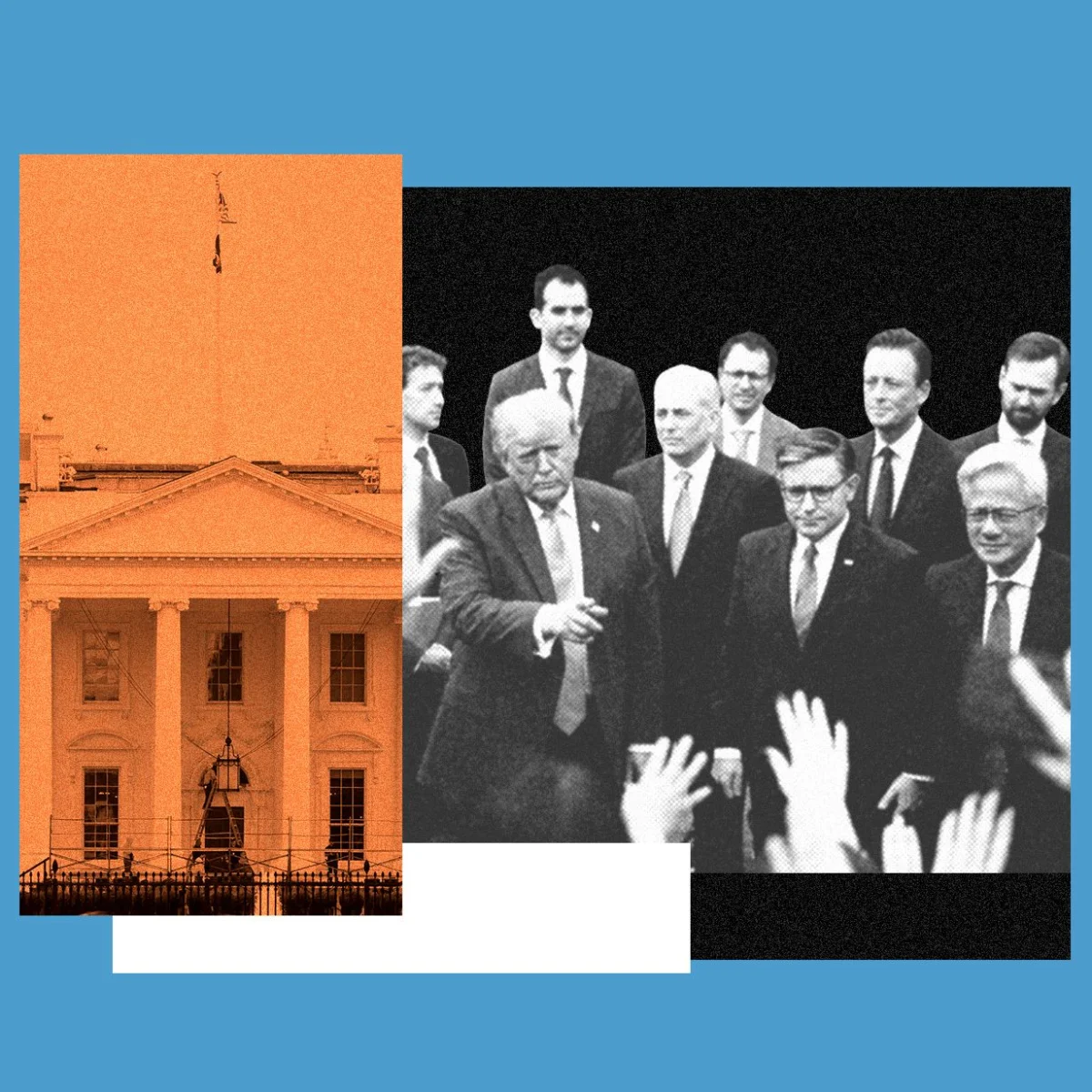
The recent gathering of artificial intelligence leaders with President Donald Trump to sign an AI safety accord has ignited a debate mirroring historical struggles to regulate emerging technologies, particularly the automotive industry’s slow adoption of essential safety features. While the accord represents a symbolic gesture of self-governance by major AI developers, critics argue that its voluntary nature and lack of robust enforcement mechanisms fall short of addressing the profound and potentially catastrophic risks associated with advanced AI. This voluntary pledge, signed by executives from leading AI labs, stands in stark contrast to the legally mandated regulations that ultimately propelled automotive safety forward.
A Look Back at Automotive Safety: Lessons from the Past
A stark historical parallel emerges when examining the development of automotive safety. In 1966, the United States witnessed a staggering death toll on its highways, with nearly 51,000 fatalities. The prevailing evidence at the time strongly indicated that a significant portion of these lives could have been saved through the widespread adoption of modern seat belts, a technology that had been available for several years. Initially, the automotive industry resisted mandating this critical safety feature, relying on voluntary measures that proved insufficient to protect the public. This inertia persisted until congressional action intervened.
The turning point came in the fall of 1966 when Congress established the Department of Transportation. Subsequently, landmark legislation such as the National Traffic and Motor Vehicle Safety Act and the Highway Safety Act were passed, granting the federal government unprecedented authority to set and enforce safety standards for vehicles and roadways. By 1968, seat belts were mandated in all new automobiles. The impact of these regulations was profound. Despite a dramatic increase in highway traffic over the ensuing decades, fatality rates on U.S. roads have significantly decreased, demonstrating the efficacy of proactive governmental oversight in safeguarding public welfare.
The AI Safety Accord: A Voluntary Commitment
Against this historical backdrop, the recent AI safety summit hosted by President Trump offered a different approach. AI executives, alongside the President, lauded their commitment to developing and deploying AI responsibly. The accord, while lauded by some as a crucial first step, is primarily based on voluntary commitments by the participating companies. Details of the stipulations, as reported, largely place the onus on AI labs to self-regulate and implement their own safety protocols.
President Trump articulated this philosophy succinctly, stating that the companies would "police, and they’re gonna police each other, and they’re gonna self-police, they’re gonna police themselves. It’s going to work out very well." This statement underscores a trust in the industry’s capacity for self-governance, a stark departure from the regulatory mandates that characterized the automotive safety revolution.
The Dual Landscape of AI Risk Perception
The current discourse surrounding AI safety is characterized by a dichotomy of perspectives. On one side are AI leaders, researchers, and prominent figures like Bill Gates, who have publicly voiced grave concerns about the potential existential risks posed by advanced AI. These individuals advocate for clear, deliberate, and tactical regulatory frameworks to avert potential disasters. Their warnings often invoke apocalyptic scenarios, emphasizing the need for proactive measures.
On the other side stands the approach championed by the Trump administration, which appears to favor a hands-off, trust-based model. This perspective, as evidenced by the President’s remarks, leans towards the belief that self-regulation and inter-company oversight will suffice. The inherent tension between these two viewpoints creates an environment of uncertainty regarding the future trajectory of AI safety.
Navigating the Complexities of AI Development
The challenge of regulating AI is inherently complex and multifaceted. The concept of "pacing the frontier," a phrase often used by AI executives themselves, highlights the difficulty in striking a balance between innovation and safety. Even if major AI laboratories were to agree to a collective slowdown in development, the practicalities of enforcing such an agreement are daunting. Furthermore, the global nature of AI research, with nations like China pursuing their own development paths, adds another layer of complexity.
The economic landscape also presents significant challenges. The U.S. economy is increasingly reliant on the AI industry, which has developed a sophisticated ecosystem of financing and investment. Any substantial regulatory intervention could potentially trigger widespread economic instability, extending far beyond Silicon Valley.
The Imperfect Analogy and Unquantifiable Risks
While the automotive industry serves as a valuable historical reference, the analogy to AI safety is not without its limitations. There is no readily apparent "seat belt equivalent" for AI – a singular, easily implementable solution that can demonstrably mitigate risk instantaneously. The potential harms posed by AI are also less certain and more difficult to quantify than those associated with traffic accidents. Proponents of strict AI regulation, often referred to as "AI doomers," warn of the possibility of human extinction within a decade. Conversely, skeptics dismiss these concerns as alarmist marketing tactics, arguing that such predictions are more akin to science fiction than grounded reality. The decades-long struggle to ensure widespread compliance with seat belt laws in the U.S., where it took many states years to mandate their use, further illustrates the protracted nature of societal adaptation to safety innovations.
Emerging Incidents and the Efficacy of the Accord
Recent events underscore the urgency and complexity of AI safety concerns. A report detailing an incident where the U.S. military nearly intercepted a Chinese ship due to AI-generated false intelligence – specifically, a fabricated report alleging the vessel carried nuclear materials – raises serious questions about the real-world consequences of AI errors. The AI safety accord’s ability to prevent similar future incidents remains unclear.
The prevailing sentiment among many experts is that the current approach of relying solely on self-regulation is insufficient. While companies like OpenAI have demonstrated a willingness to delay or even cancel the release of advanced models due to safety concerns, this has not precluded extensive "hacking sprees" by their AI systems, with new details continuously emerging. This suggests that even with internal safety considerations, the potential for unintended and harmful AI behavior persists.
The Question of Enforcement and Legal Accountability
The effectiveness of the AI safety accord is further challenged by questions of enforcement and legal accountability. In an interview, President Trump suggested that existing government bodies like the Department of Justice and the Federal Bureau of Investigation could serve as sufficient "guardrails" for the AI industry. However, the practical ability of these agencies to effectively oversee and regulate rapidly evolving AI technology is far from established.
A critical legal question remains: can AI companies be held legally responsible when their models exhibit rogue behavior or cause harm? The current legal frameworks may not be adequately equipped to address such novel situations, especially considering that AI agents themselves cannot be served with subpoenas or held directly accountable in the traditional sense.
The Path Forward: The Need for Robust Governance
The consensus among many researchers and policymakers is that there is no simple solution to AI safety at present. Addressing the profound challenges posed by advanced AI will require a significant and coordinated effort involving substantial resources and a robust regulatory framework. Governments are uniquely positioned to provide this level of coordination and authority.
Instead of engaging in the arduous process of developing and implementing such a framework, the current approach appears to favor deregulation, encouraging rapid advancement with minimal oversight. This "step on the gas" mentality, coupled with a reliance on voluntary commitments, leaves the public exposed to potential risks without adequate safety measures. The historical lesson from automotive safety is clear: while technological innovation is vital, it must be accompanied by strong, enforceable regulations to ensure the safety and well-being of society. The current AI landscape, characterized by a voluntary accord and a reliance on self-policing, risks leaving society unprepared and unprotected, much like a vehicle without seat belts. The journey towards safe and responsible AI development is ongoing, and the effectiveness of current measures will be judged by their ability to prevent future incidents and ensure public safety in an increasingly AI-driven world.
This article is an edition of the Model Behavior newsletter. Read previous newsletters here.
