

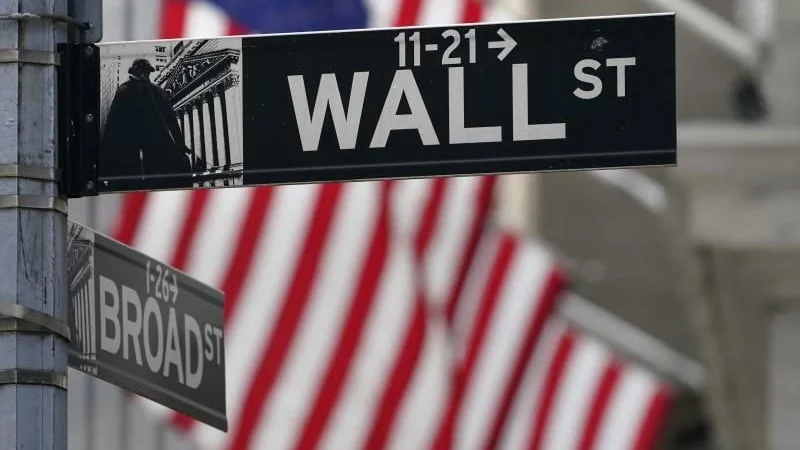
Düsseldorf, Germany – Major US stock indices are exhibiting a cautious trading pattern on Thursday, failing to muster significant gains following a day of losses. This subdued market sentiment is largely attributed to a confluence of persistent geopolitical tensions, particularly the elevated global oil prices, and evolving expectations surrounding US monetary policy. Investors remain caught between hopes for de-escalation in international conflicts and the pragmatic reality of a challenging supply environment.
The price of Brent crude oil, a key benchmark for European markets, has continued its upward trajectory, with November delivery contracts trading 3.1 percent higher at $106 per barrel. This marks a continuation of the price surge observed on Tuesday and Wednesday, underscoring the significant impact of energy costs on broader economic outlooks. Experts note that market participants are grappling with conflicting signals. On one hand, there are whispers of potential diplomatic breakthroughs in resolving the standoff between the United States and Iran. On the other hand, the immediate outlook for global energy supply remains precarious, suggesting that high oil prices could persist for the foreseeable future.
The Strait of Hormuz: A Geopolitical Flashpoint
The current spike in oil prices is intrinsically linked to the escalating tensions in the Middle East. The Strait of Hormuz, a vital chokepoint for global oil transport, continues to face significant disruptions, making maritime passage increasingly difficult. This precarious situation was further amplified by recent statements from Mohsen Rezaei, the Secretary of Iran’s Supreme National Security Council. On Wednesday, Rezaei declared that the Strait of Hormuz would not be reopened unless Iran’s conditions were met, a stance that has heightened concerns over potential supply disruptions and further fueled upward pressure on oil prices.

This development is particularly significant given the Strait’s critical role in global energy security. Approximately 20% of global petroleum liquids supply transits through the Strait of Hormuz, making any impediment to its free flow a significant concern for energy-importing nations. The economic implications are substantial, with higher energy costs feeding into inflation across various sectors.
Investor Hesitation and Inflationary Concerns
The sustained high energy prices are fanning the flames of inflation and interest rate anxieties within the financial markets. Market analysts observe that strong demand signals emanating from both the industrial and services sectors of the US economy suggest a continued imbalance between supply and demand. This persistent imbalance raises the specter of further interest rate hikes by the U.S. Federal Reserve, a prospect that typically dampens investor appetite for riskier assets.
Kyle Rodda, a market analyst at capital.com, highlighted this dynamic, noting that the Federal Reserve’s mandate includes controlling inflation. Should inflation remain stubbornly high, driven in part by energy costs and supply chain issues, the Fed may be compelled to maintain its hawkish stance, potentially impacting corporate earnings and economic growth.
Further compounding these concerns are discussions within the US regarding a potential export ban on diesel fuel. Such a move, if implemented, could trigger new waves of inflation on a global scale. However, analysts are also acknowledging that global economies have, thus far, demonstrated a degree of resilience in adapting to the current higher interest rate environment. Thomas Altman of QC-Partners remarked, "New economic data shows that economies worldwide have so far managed well with the higher interest rate level." This suggests a complex interplay of factors, where immediate inflationary pressures are being weighed against the observed adaptability of economic systems.

U.S. Treasury Market Experiences Volatility
The yields on U.S. Treasury bonds have recently seen an uptick, driven by robust U.S. economic data that has fueled market expectations of further interest rate increases. The yield on the benchmark ten-year Treasury note has consistently moved beyond the psychologically significant 5 percent mark, signaling a growing demand for higher returns from investors.
The situation is even more pronounced for longer-duration bonds. The yield on 30-year U.S. Treasury bonds has reached as high as 5.4583 percent, a level not seen since 2004. While short-term Treasury yields largely reflect immediate interest rate expectations, the sustained rise in yields for 30-year bonds indicates investors’ willingness to finance government debt over the long term, albeit at a higher cost.
On Wednesday, the yield on the ten-year U.S. Treasury note climbed to 5.13 percent, marking its highest level in nearly two decades. However, this surge was accompanied by one of the lowest levels of interest observed at an auction for this maturity, according to market reports. This phenomenon suggests a growing investor reticence towards U.S. government debt. Analysts posit that this reluctance is not solely attributable to inadequate inflation compensation but also to a potentially waning confidence in the asset class itself. This erosion of confidence could have far-reaching implications for government financing and the broader stability of the bond market.
The Diplomatic Stage: Xi and Trump Convene

Amidst the economic uncertainties, a significant diplomatic event is unfolding with Chinese President Xi Jinping’s visit to the United States. This marks Xi’s first trip to the U.S. in nearly three years, and the focus of the discussions is squarely on the trade and technology tensions that have characterized the relationship between the two global superpowers.
Jürgen Molnar, a strategist at Robomarkets, outlined the critical issues on the agenda: "Tariffs, export restrictions, artificial intelligence, Taiwan, and the Iran conflict are on the table." These are complex and deeply intertwined issues that have shaped global economic and political landscapes for years.
A state banquet is scheduled for the evening, attended by the chief executives of major U.S. corporations, including Apple, Nvidia, OpenAI, and JPMorgan. Prior to the formal talks, President Donald Trump characterized his relationship with President Xi as a "truly great friendship" built on mutual respect and the fundamental interests of both nations, dating back to his first election in 2016. This emphasis on personal rapport suggests an attempt to foster a more constructive dialogue amidst ongoing bilateral challenges.
In a symbolic gesture, President Xi announced that China would send two pandas to the Atlanta Zoo, referring to them as "ambassadors of friendship." Furthermore, China plans to invite 100,000 young U.S. citizens for exchange and study visits over the next five years. Xi emphasized the importance of peaceful coexistence between the two nations and advocated for competition to be conducted in a positive and bounded manner.
Both leaders also addressed the critical issue of artificial intelligence, with Xi stating that China and the U.S. share a joint responsibility to ensure that AI remains under human control. President Trump echoed this sentiment, anticipating significant outcomes from the discussions on this front, stating, "The decisions we make today in these areas can promote peace and prosperity for decades to come." This focus on AI underscores its growing importance as a driver of future economic and geopolitical power.

Trade Relations and a Pause in the Tariff War
In anticipation of the three-day state visit, the U.S. administration recently extended the tariff pause in the trade conflict with China. According to U.S. Treasury Secretary Scott Bessent, the agreement has been extended until January 10th. This pause follows an understanding reached between President Xi and President Donald Trump at a summit in Busan, South Korea, in October 2025, where they agreed to a temporary cessation of trade hostilities. The duration and effectiveness of these pauses remain a key point of observation for market participants.
The U.S. Dollar on the Rise
On the foreign exchange market, the anticipation of continued interest rate hikes is bolstering the U.S. dollar. The Dollar Index reached a fresh two-month high, trading at 101.238 points. The Euro, meanwhile, is fluctuating around its Wednesday closing price of $1.1380. This strength in the dollar reflects the higher yields offered by U.S. debt instruments, making dollar-denominated assets more attractive to international investors.
U.S. Federal Reserve Governor Michael Barr has indicated that the Fed will likely need to implement further interest rate increases due to persistent inflation. The CME Group’s FedWatch tool suggests that traders are pricing in a 68 percent probability of an interest rate hike in October. This signals a strong market expectation of continued monetary tightening by the U.S. central bank.

Individual Stock Performance: A Mixed Bag
Meta Platforms: In a surprise move on Wednesday, Meta CEO Mark Zuckerberg unveiled "Charm," a new AI-powered pocket device. This compact gadget features a small screen and a 5G modem but lacks phone capabilities. Its primary function is to provide access to the company’s AI assistant, "Muse." Zuckerberg articulated his vision of "personal superintelligence" as the next major technological breakthrough. However, analysts have voiced skepticism, pointing to past failures of similar devices. Linda Sui, founder of the analysis firm Smart Analytics Global, commented, "As long as ‘Charm’ cannot offer unique functions, it is likely to remain a ‘nice-to-have’ device for tech enthusiasts rather than becoming a mass-market product." Despite these reservations, Meta’s shares saw a notable increase of approximately 3.7 percent.
MGM Resorts: The withdrawal of a multi-billion dollar takeover offer has negatively impacted the stock of U.S. casino operator MGM Resorts. The shares have fallen by over ten percent on Wall Street, trading at $33.89, their lowest level in seven months. This sharp decline reflects investor uncertainty following the failed acquisition attempt.
Oracle: A media report detailing potential issues with a data center project has unsettled investors in Oracle. The U.S. software company’s shares have dipped by 3.4 percent. According to Bloomberg, citing insider sources, Oracle is seeking to protect itself from potential cost overruns on a significant data center project in New Mexico. The company has reportedly issued a "force majeure" declaration to the project developer, Blue Owl. Force majeure clauses are typically invoked to absolve parties from contractual obligations due to unforeseen events beyond their control. Oracle’s project, codenamed "Jupiter," aims to be operational by 2028, and the company is reportedly seeking to defer payments should the project face delays.
PepsiCo: The U.S. beverage manufacturer’s stock has experienced a slight downturn, falling by approximately 0.8 percent, following reports of planned price increases. Bloomberg, citing insider information, reported that PepsiCo intends to raise prices for select chip and soda products by the end of the year or in early 2027. This comes after PepsiCo had previously reduced prices for products like Lay’s and Doritos by up to 15 percent earlier this year, a move necessitated by customer resistance to prior price hikes. The company’s strategy appears to be a delicate balancing act between managing input costs and maintaining consumer demand.

The market’s reaction to these individual company developments highlights the diverse factors influencing stock performance, ranging from product innovation and strategic partnerships to deal failures and potential cost pressures. As the week progresses, investors will be closely monitoring further economic data releases and geopolitical developments for clues on the trajectory of the markets.
With agency material.
