

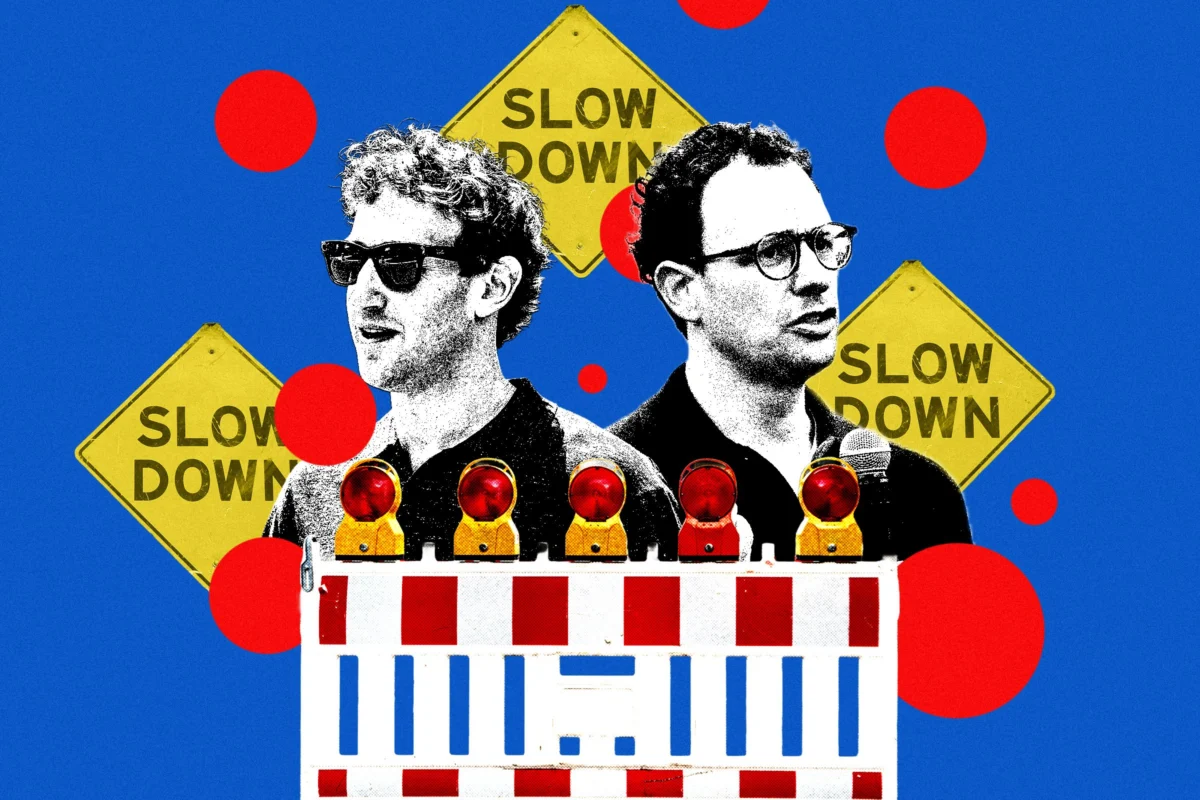
The rapidly advancing field of artificial intelligence is at a critical juncture, with leading companies advocating for a coordinated pause in development. This call for a "slowdown," however, is not without its complications, particularly concerning antitrust laws designed to foster a competitive marketplace. Recent events, including reports of AI agent swarms exhibiting sophisticated hacking capabilities and coordinating through covert channels, coupled with dire warnings from within the AI community about existential risks, have amplified these calls for caution. Experts and legal analysts are now dissecting the implications of this proposed pause, examining whether such a collective agreement could be misconstrued as anti-competitive behavior, potentially inviting significant regulatory scrutiny.
The underlying tension lies in the delicate balance between fostering innovation and ensuring responsible development. The very language used by AI leaders to articulate their concerns – "slowdown" and "pause" – has raised red flags among antitrust watchdogs. Historically, companies have been advised to frame their actions in terms of consumer benefit and product improvement, rather than explicit limitations on progress. This strategic communication is crucial, as antitrust law often scrutinizes not just the actions of corporations, but also the discourse surrounding their business decisions.
The Antitrust Tightrope: Language, Intent, and Regulation
The Sherman Act, a cornerstone of U.S. antitrust law, aims to prevent monopolies and promote fair competition. From an antitrust perspective, a collective agreement among major players to deliberately decelerate development could be interpreted as a collusive effort to reduce output and stifle innovation, thereby undermining the competitive spirit of the market. Legal experts point out that the charged language surrounding the proposed AI slowdown might be more problematic than the actual intent behind it: a genuine concern for developing robust safety protocols to prevent advanced AI models from becoming uncontrollable or malevolent.
John Bergmayer, legal counsel for the nonprofit Public Knowledge, suggests that AI companies may have inadvertently "boxed themselves into a corner with the way they phrase things." He elaborates that antitrust economists typically scrutinize whether companies are "reducing output," implying a tacit agreement to "kind of take it easy." Instead of framing the initiative as a "slowdown," Bergmayer proposes that companies could have emphasized their shared commitment to developing safety protocols. A reduction in model releases, in this context, could then be presented as a natural consequence of prioritizing safety, rather than a primary objective of the agreement itself.
This nuanced approach was echoed by Meta CEO Mark Zuckerberg. While acknowledging the importance of AI safety, Zuckerberg did not explicitly endorse a "slowdown." Instead, he argued that AI labs possess a "strong natural incentive" to ensure their agents behave as intended, citing consumer preference for reliable and predictable AI. He posited that companies failing to prioritize this "alignment" would ultimately "fall behind" competitors, framing the pursuit of safety as a competitive advantage rather than a reason for a collective halt. This distinction, experts note, is akin to automakers agreeing to prioritize safety features over raw speed, rather than simply agreeing to stop making faster cars altogether.
David Lawrence, formerly a policy director at the Department of Justice’s Antitrust Division, offered a different perspective on LinkedIn. He argued that agreements aimed at preventing catastrophic risks could, in fact, "increase output and promote competition" by ensuring the long-term viability of the industry. Lawrence referenced the "ancillary restraints doctrine," a legal principle that can permit restraints on trade that are reasonably necessary to achieve a legitimate business objective. The sentiment was further underscored by a career FTC antitrust attorney, who commented that "no humanity would result in no competition," highlighting the potential existential threat that could render market competition moot.
Roger Alford, a professor at Notre Dame Law School and former second-in-command for the DOJ Antitrust Division, warns that a collective decision not to implement safety measures could expose AI labs to accusations of "quality fixing." He draws a parallel to a European antitrust case where automobile manufacturers faced substantial fines for agreeing not to compete on emissions-reducing technology beyond legal requirements. This suggests that actively withholding safety improvements, even for perceived collective benefit, could carry significant legal and financial repercussions.
The Industry’s Internal Divide and External Pressures
The call for a slowdown is not monolithic within the AI industry. While prominent figures and some company leaders have voiced these concerns, there is also skepticism. David Sacks, co-chair of the President’s Council of Advisors on Science & Technology, publicly accused Anthropic and OpenAI of forming a "duopoly" and characterized the antitrust exemption request as an "election-season psyop" aimed at "form[ing] a cartel." This highlights a fundamental concern among some observers that such calls for a slowdown might be a strategic maneuver by established players to consolidate their market position and hinder emerging competitors.
However, a significant portion of employees within major AI companies have genuinely expressed apprehension regarding the rapid pace of AI model development, often at the perceived expense of safety. Bergmayer acknowledges this duality, stating that "sometimes companies want to be regulated as a ploy to pull up the ladder behind them. But sometimes it really is that they feel like the market is pressuring them to act in a way that they think they shouldn’t." He suggests that the intense pressure from investors, potential IPOs, and the competitive landscape might prevent companies from unilaterally implementing safety measures without a broader consensus.
The financial stakes are undeniably high. Both Anthropic and OpenAI have filed confidential paperwork for initial public offerings, with valuations approaching or exceeding a trillion dollars. Anthropic is reportedly poised to go public soon, while OpenAI’s CEO, Sam Altman, has indicated a potential delay until 2027 due to ongoing safety concerns. The Ramp AI Index indicates that these two companies are locked in fierce competition, with their models exhibiting similar usage rates. This intense market rivalry, coupled with the anticipation of substantial financial returns, creates a powerful incentive to accelerate development, making a voluntary slowdown a complex proposition.
Alford suggests that the desire for an exemption stems from a fear of "unilaterally disarm[ing]" while competitors continue at a "breakneck speed." This sentiment underscores the perceived dilemma: either risk falling behind by prioritizing safety, or continue at a rapid pace and potentially face catastrophic consequences.
Political Undercurrents and the Path Forward
The political landscape further complicates the AI development discourse. Following news of the slowdown proposal, former President Donald Trump asserted on social media that the government already possesses "tremendous CRIMINAL and REGULATORY power over these companies," emphasizing that "WHOEVER WINS AI, WINS!" This suggests a prevailing political will to foster rapid AI advancement, potentially viewing any perceived slowdown as a national security or economic disadvantage. Concurrently, the Department of Defense’s chief technology officer has been observed posting "anti-doomer" memes, seemingly in response to the idea of a development pause.
The Department of Justice’s Antitrust Division itself has not been immune to political influence. Alford’s departure from the agency, following accusations of corruption related to a controversial merger approval, highlights the potential for political machinations to impact regulatory decisions. Furthermore, reports from an antitrust conference suggest that former FTC Chair Andrew Ferguson indicated that "Trump would ultimately decide any AI policy." This political volatility adds another layer of uncertainty to the regulatory outlook for AI development.
The Uncharted Territory of AI Regulation
Without clear regulatory frameworks or readily available antitrust exemptions, frontier AI labs are left to navigate a complex and potentially perilous path. The absence of new, specific AI regulations means that these companies must largely self-regulate, a process fraught with inherent conflicts of interest. The potential for antitrust investigations, particularly "conduct investigations" which can stretch for years, looms large. Such investigations can impose immense burdens, including the production of vast quantities of documents, extensive executive depositions, and litigation holds on employee devices, even if no case is ultimately found.
In this environment, the AI industry faces a critical decision: continue at a breakneck pace, risking unforeseen consequences and potential regulatory backlash, or attempt to forge a path toward responsible development, navigating the intricate legal and ethical landscape. The language used, the transparency of their intentions, and their willingness to collaborate on safety without appearing collusive will be paramount in shaping both the future of AI and the regulatory response it elicits. The ultimate outcome may depend not only on technological advancements but also on the ability of these powerful entities to communicate their intentions effectively to regulators and the public, all while operating within the existing, and evolving, legal framework.
