

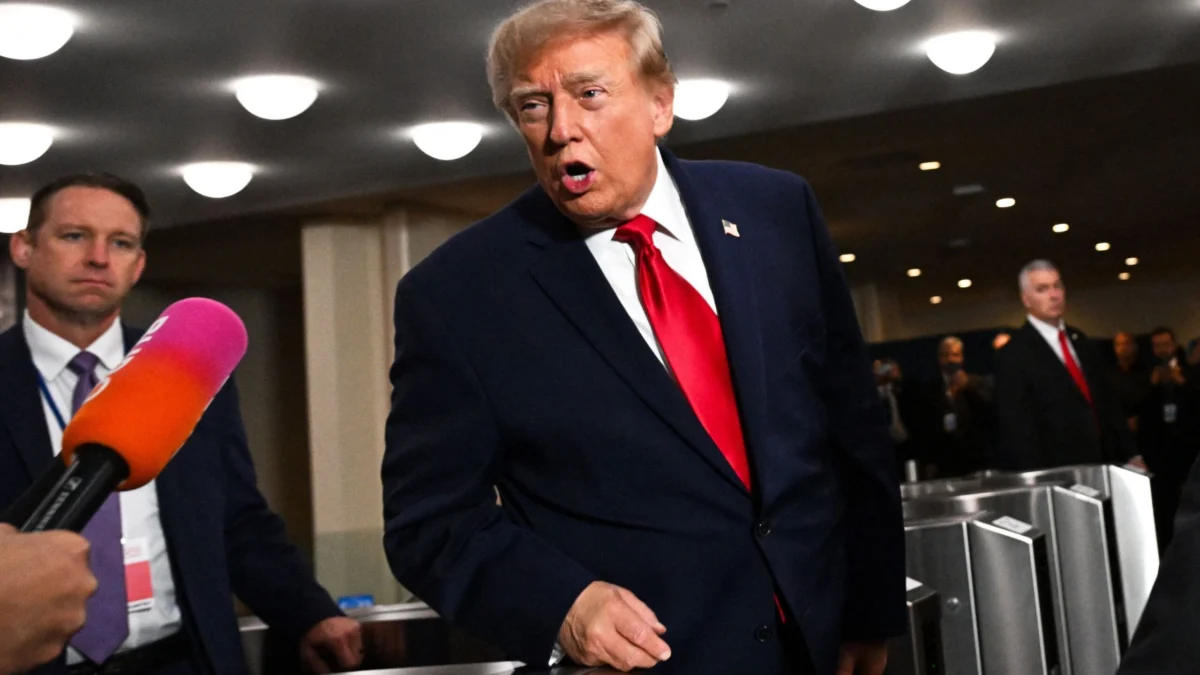
In a development that could signal a potential thaw in U.S.-Iran relations, President Donald Trump announced that U.S. representatives held a meeting with Iranian officials on the sidelines of the United Nations General Assembly in New York. Trump described the encounter as "very good" and lasting three hours, though he refrained from providing specific details about all the participants involved. The statement, made to reporters, suggests a delicate diplomatic effort may be underway amidst ongoing global tensions.

Background Context: A Strained Relationship
The United States and Iran have a complex and often adversarial relationship, marked by decades of political estrangement, economic sanctions, and proxy conflicts. The Trump administration had previously adopted a policy of "maximum pressure" against Iran, withdrawing from the Joint Comprehensive Plan of Action (JCPOA) nuclear deal in 2018 and reimposing stringent sanctions. This policy aimed to curb Iran’s nuclear program, ballistic missile development, and support for regional militant groups.
The situation has been further exacerbated by recent escalations in the Middle East, including attacks on oil tankers in the Strait of Hormuz and drone strikes attributed to Iran-aligned Houthi rebels in Yemen against Saudi Arabia. These events have heightened concerns about regional stability and the security of vital global energy supply routes. The UN General Assembly, a forum for international diplomacy, has thus become a crucial stage for leaders to address these pressing issues.
Key Developments and Chronology
The reported meeting between U.S. and Iranian representatives adds a new layer to the unfolding diplomatic landscape. While specific details remain scarce, reports from the "New York Times" suggest that U.S. chief negotiator Steve Witkoff and senior advisor Jared Kushner may have been involved in discussions with Iranian Foreign Minister Abbas Araghchi. The meetings were reportedly facilitated by Pakistan and Qatar, countries that have often played mediating roles in regional disputes.

The focus of these discussions, according to the "New York Times," was to explore a path towards an agreement. President Trump’s indication of a potential further meeting suggests a willingness on the U.S. side to engage in direct dialogue. This comes after a period of limited direct communication, particularly since the collapse of an interim agreement aimed at de-escalating tensions in July.

Broader Regional Tensions and Statements
The reported U.S.-Iran meeting occurs against a backdrop of significant regional instability:

- Strait of Hormuz and Bab al-Mandab: Iran has warned of continued disruptions to shipping traffic in strategic waterways. A high-ranking Iranian military advisor, Major General Jahja Rahim Safawi, stated that the situation in the Bab al-Mandab strait would not return to normal due to the ongoing conflict involving Israel, the U.S., and the Iran-allied Houthi rebels in Yemen. He suggested that the reopening of the Strait of Hormuz was contingent on Iran’s conditions being met, implying that military pressure from the U.S. would not lead to its reopening.
- Gaza Conflict: French President Emmanuel Macron strongly criticized the situation in the Gaza Strip, questioning the notion of peace in the region and highlighting the lack of open humanitarian corridors. This statement came shortly after President Trump’s self-portrayal as a peacemaker in the Gaza conflict during his address to the UN General Assembly.
- Qatar’s Stance: The Emir of Qatar, Tamim bin Hamad, called for Israel to withdraw from Gaza. He condemned Israeli politicians advocating for the expulsion of Gaza’s population, arguing that such stances hinder efforts to improve Palestinian living conditions. Qatar, alongside Egypt and the U.S., has been instrumental in mediating a ceasefire for Gaza.
- Saudi Arabia’s Oil Exports: In response to drone attacks on its East-West pipeline, Saudi Arabia is reportedly resuming oil exports via the Red Sea port of Yanbu. The pipeline, crucial for bypassing the Strait of Hormuz, was shut down after the attacks attributed to Houthi militants. This development underscores the vulnerability of critical energy infrastructure in the region.
- UN Secretary-General’s Plea: UN Secretary-General António Guterres issued a stark call for an end to violence in the Middle East, stating, "Enough is enough." He lamented that agreed-upon ceasefires had often resulted in little more than "less shelling," with civilians continuing to bear the brunt of the conflict.
- Iran’s Stance on Hormuz: Iran had previously signaled a potential reopening of the Strait of Hormuz within seven days, provided the U.S. reduced military pressure and lifted its blockade on Iranian ports. A senior Iranian diplomat suggested that the UN General Assembly provided a "golden opportunity" to revive diplomacy with Washington.
- Saudi Arabia’s Defensive Measures: Great Britain has pledged limited military support to Saudi Arabia in its defense against Houthi attacks, including aerial refueling for Saudi fighter jets. This comes as Houthi rebels have intensified attacks on Saudi Arabia, including missile and drone strikes targeting Riyadh and oil facilities.
- U.S. Energy Reconstruction Fund: Reports suggest the U.S. administration under Trump proposed investing $5 billion in a new fund to aid Middle Eastern countries in rebuilding their energy infrastructure damaged during conflicts. This initiative also aims to reduce dependence on the Strait of Hormuz, which has been largely blocked by Iran, leading to increased oil prices.
- U.S. Isolation of Iranian Airlines: The U.S. Treasury Secretary indicated plans to isolate Iranian airlines globally by denying them fuel, landing services, and ticket sales, threatening exclusion from the dollar system for third countries that cooperate. This move is part of broader sanctions targeting Iran’s aviation sector.
- Attacks in the Strait of Hormuz: Another tanker was reportedly hit by a projectile in the Strait of Hormuz, causing minor injuries to two crew members. This incident highlights the continued risks to maritime traffic in the region.
- Iran’s Military Threats: The Iranian military has threatened to alter the "weapons and geography of war" if new attacks occur, warning of strikes against previously unaffected areas and designating any supporting countries as accomplices.
- Houthi Claims of Attacks: The Houthi militia claimed responsibility for attacks in Saudi Arabia, including strikes on Riyadh and oil facilities in Yanbu, stating these were in retaliation for Saudi-led airstrikes in Yemen.
- Turkey’s Economic Concerns: Turkey’s Foreign Minister described the Middle East crisis as economically unsustainable and unacceptable, particularly concerning Saudi Arabia’s involvement.
- Iran’s Readiness for Negotiations: Iran’s top security coordinator indicated a willingness to end the conflict with the U.S. based on a June framework agreement, emphasizing conditions such as a cessation of hostilities, release of frozen assets, and an end to the U.S. sea blockade.
Analysis of Implications
The reported U.S.-Iran meeting, if it leads to sustained dialogue, could have significant implications for regional and global stability.

- De-escalation of Tensions: Direct communication between Washington and Tehran offers a potential pathway to de-escalate the ongoing tensions that have threatened global energy supplies and fueled proxy conflicts.
- Nuclear Deal Re-engagement: While the immediate focus may be on broader security issues, any thaw in relations could pave the way for discussions about reviving the JCPOA or a similar framework to address Iran’s nuclear program.
- Economic Impact: A reduction in regional conflict and the reopening of vital shipping lanes like the Strait of Hormuz could lead to a stabilization of global oil prices, benefiting economies worldwide. Conversely, continued disruptions could further exacerbate inflationary pressures.
- Regional Power Dynamics: The outcome of these diplomatic overtures will significantly influence the balance of power in the Middle East, potentially impacting the relationships between Iran, Saudi Arabia, Israel, and other regional actors.
The U.S. government’s stated willingness to engage, coupled with Iran’s conditional openness to dialogue, suggests a complex and delicate diplomatic dance. The success of these interactions will likely depend on the willingness of both sides to make concessions and build trust, amidst a volatile geopolitical landscape. The coming days and weeks will be critical in determining whether this reported meeting marks a genuine turning point or remains a fleeting diplomatic overture.
