

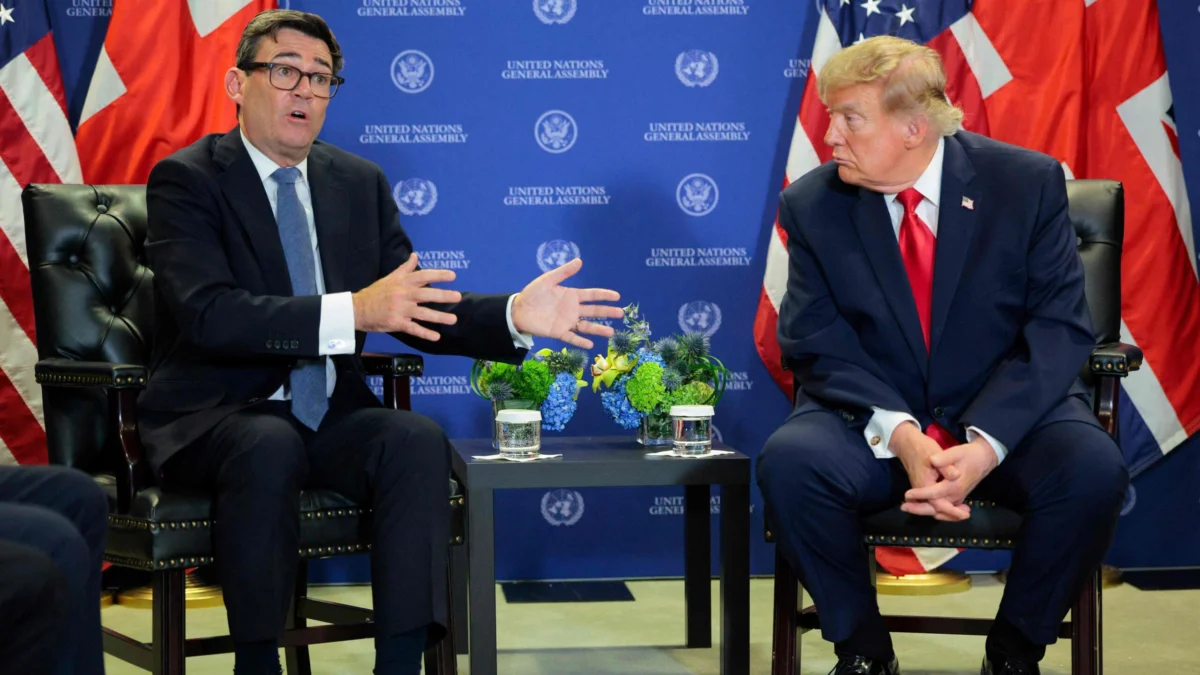
London – In a decisive move to reassert Britain’s standing on the global stage, new British Prime Minister Andy Burnham has embarked on his inaugural major overseas diplomatic tour, prioritizing geopolitical realignments and critical trade relationships. The cornerstone of this ambitious itinerary has been a series of high-stakes meetings, including a significant encounter with United States President Donald Trump on the sidelines of the United Nations General Assembly in New York. Burnham’s immediate objective was to mend the fraying ties between Washington and London, strained significantly by the recent Iran War and its complex aftermath.
The Prime Minister’s agenda did not end with the American administration. Shortly after his engagements in New York, Burnham turned his attention to Brussels, seeking to revitalize a stalled restart of relations with the European Union. London and Brussels have repeatedly postponed a crucial summit, initially slated for the summer, due to persistent disagreements over industrial exports and youth exchange programs. These talks represent a critical juncture for the post-Brexit economic and social landscape, with both sides keen to establish a stable and mutually beneficial framework.
Mending Transatlantic Bonds Amidst Geopolitical Tensions
The meeting with President Trump, held against the backdrop of the annual UN gathering, provided Prime Minister Burnham with a critical platform to address the lingering tensions exacerbated by the Iran War. While details of their private discussions remain undisclosed, sources suggest Burnham emphasized the importance of continued US support for Ukraine in its ongoing conflict with Russia. This diplomatic push underscores Britain’s commitment to international stability and its role as a key ally in confronting aggression.
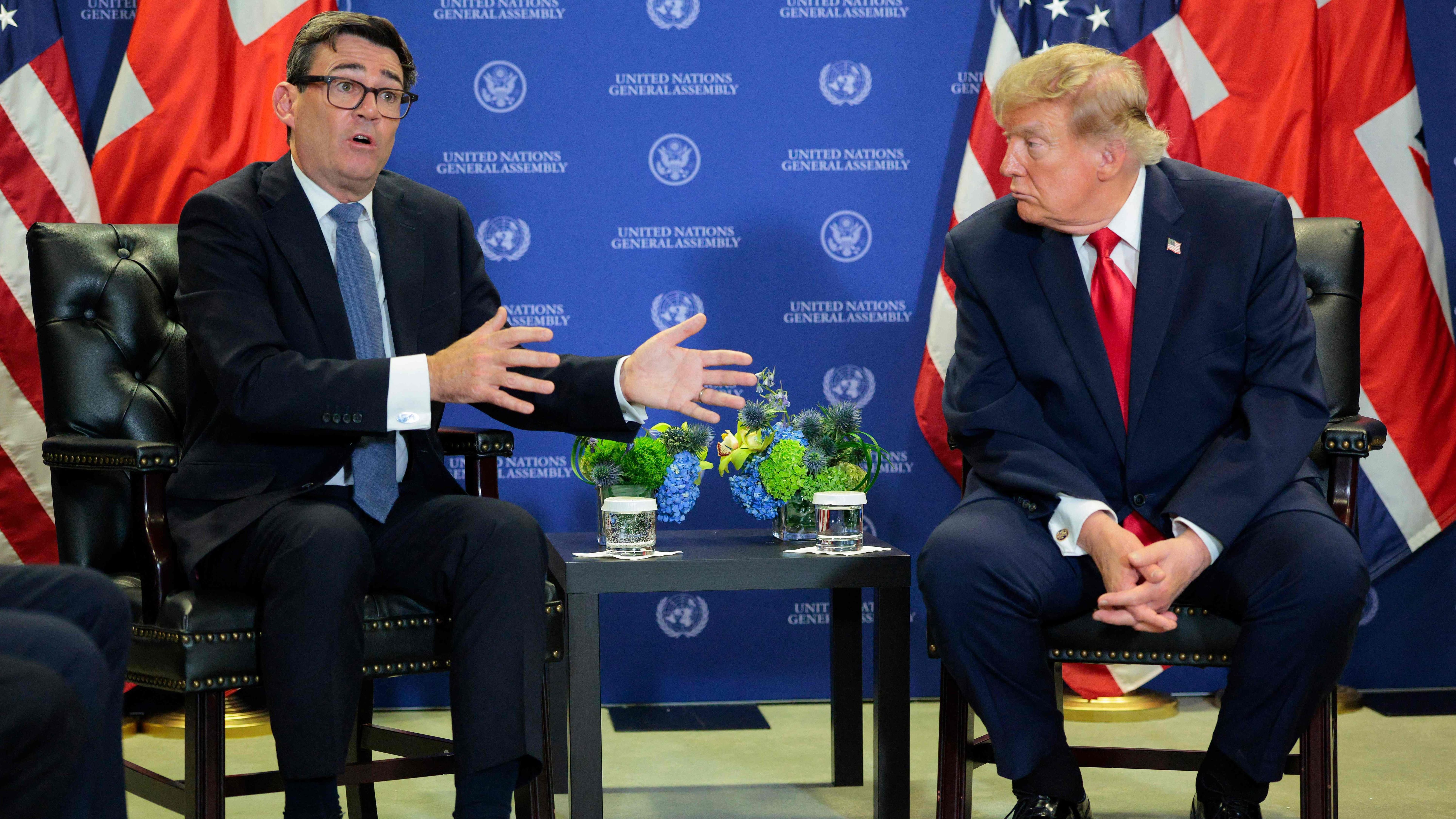
The Iran War, a deeply divisive conflict, had created significant fissures in the traditional Anglo-American alliance. Burnham’s overtures signaled a clear intent to bridge these divides and reaffirm the enduring strategic partnership between the two nations. The emphasis on continued support for Ukraine also highlights a shared concern regarding Russian expansionism and the need for a united front against such threats. This engagement with President Trump signals a proactive approach by the new British government to stabilize key international relationships and address pressing global security concerns.
Revitalizing EU Relations: The Road to a Post-Brexit Summit
Concurrently, Prime Minister Burnham’s engagement with European Commission President Ursula von der Leyen in Brussels aimed to unblock stalled negotiations and pave the way for a much-anticipated summit. The protracted delays in scheduling this meeting underscore the complexities of the UK’s relationship with the EU post-Brexit. The core sticking points – industrial exports and youth exchange programs – represent more than just trade and cultural initiatives; they are symbolic of the broader economic and social integration that both sides are striving to redefine.
The proposed "Made in Europe" initiative, a key element of the ongoing discussions, has emerged as a significant area of contention. British industry leaders, particularly within the automotive sector, have voiced strong concerns about being excluded from this initiative. They argue that such exclusion could lead to substantial economic repercussions, jeopardizing the competitiveness of British companies and potentially leading to "collateral damage" for the UK economy.
The "Made in Europe" Stalemate: Economic Implications for the UK
The core of the dispute lies in the potential exclusion of British firms from benefits associated with the "Made in Europe" initiative. This includes access to EU subsidies for environmentally friendly vehicle fleets and participation in public procurement processes. For the automotive sector, a cornerstone of the British manufacturing base, this exclusion could prove devastating.

Mike Hawes, Chief Executive of the Society of Motor Manufacturers and Traders (SMMT), articulated the industry’s concerns, stating, "Despite Brexit, supply chains remain tightly intertwined." The SMMT’s data reveals a substantial annual trade volume of €80 billion between the UK and continental Europe. Furthermore, an analysis commissioned by the SMMT from Oxford Economics estimates that British automotive production contributes €24 billion in economic activity across the entire EU. This interconnectedness highlights the mutual dependence and the significant risks associated with erecting new trade barriers. The European Automobile Manufacturers’ Association (ACEA) has reportedly expressed support for the British position, recognizing the shared interests and the potential negative impacts of protectionist measures.
Youth Exchange: A Bridge for Future Generations
Beyond industrial exports, the youth exchange program remains a critical, yet contentious, aspect of the UK-EU negotiations. The EU’s proposal envisions an annual intake of approximately 100,000 young Europeans to work and study in the UK for a defined period. A key demand from the EU is that these individuals should not face higher tuition fees than their British counterparts. This element is crucial for fostering cultural understanding, building future leadership, and strengthening people-to-people connections between the UK and the EU.
Prime Minister Burnham has indicated his willingness to proceed with a concrete agreement, emphasizing that this program, alongside the industrial export framework, forms the "core of the summit." His stance suggests a recognition of the long-term benefits of such exchanges, even as he navigates the immediate economic and political pressures. The potential for a UK return to the EU, while not the immediate focus, has been acknowledged by Burnham as a topic for future discussion, indicating a pragmatic approach to current challenges.
A Glimpse into Future Political Agendas
While currently prioritizing tangible diplomatic and economic outcomes, Prime Minister Burnham has not entirely dismissed the possibility of the Labour Party advocating for a full return to the European Union in future election campaigns. However, he strategically deferred this discussion, emphasizing his immediate focus on forging a productive summit with the EU. This approach allows him to address the pressing issues at hand without prematurely alienating potential allies or creating unnecessary political distractions.

Addressing Global Challenges: AI Governance and International Security
Prime Minister Burnham’s foreign policy agenda extends beyond bilateral and regional relationships to encompass global governance challenges. In New York, he actively advocated for the establishment of international regulations governing the safe development of Artificial Intelligence (AI). Citing concerns raised by insiders within AI companies, Burnham acknowledged the profound implications of this rapidly evolving technology.
He stressed his commitment to finding a "golden mean," balancing the immense potential benefits of AI with its inherent risks. Burnham positioned himself not as an "apocalypse prophet" regarding AI, but as a pragmatic leader seeking to foster responsible innovation. This nuanced approach reflects a growing global consensus on the need for proactive governance in the field of AI.
The G20 Platform: Britain’s Vision for AI Regulation
With Britain set to assume the presidency of the G20 in the coming year, the nation has pledged to make the responsible development and deployment of AI a central theme of its tenure. This initiative signals Britain’s ambition to play a leading role in shaping global norms and standards for AI, a technology poised to redefine economies and societies worldwide. The G20, representing the world’s largest economies, provides a critical forum for establishing broad international consensus on such a complex and far-reaching issue.
President Trump’s earlier dismissive remarks regarding the potential risks of AI were noted, suggesting a potential divergence in approaches. However, Burnham’s proactive engagement signals a clear intent to use the G20 platform to drive a unified international agenda on AI governance, aiming to mitigate potential downsides while harnessing the transformative power of this technology.

Broader Geopolitical Considerations: Yemen and Saudi Arabia
The Prime Minister’s diplomatic engagements also touched upon broader regional security dynamics. Britain’s recent provision of military assistance to Saudi Arabia, engaged in a conflict with Iran-backed Houthi rebels in Yemen, was highlighted. Burnham stated, "We are ready to contribute," signaling Britain’s willingness to participate in efforts to stabilize the volatile situation in the Middle East. This stance reflects a continuation of previous government policies, underscoring a commitment to regional security partnerships, albeit within a framework of careful consideration and strategic alignment.
The historical context of the previous British government’s approach to the Iran conflict, under then-Prime Minister Keir Starmer, revealed initial hesitations in offering military support, which had drawn criticism from the US. Burnham’s current articulation suggests a more decisive and aligned approach, seeking to bolster traditional alliances while navigating complex regional conflicts.
In summary, Prime Minister Andy Burnham’s initial foreign policy maneuvers have been characterized by a strategic blend of transatlantic diplomacy, EU engagement, and a forward-looking approach to global challenges like AI governance. His efforts to mend strained relationships and redefine Britain’s role on the international stage underscore a clear mandate for active and assertive diplomacy in a complex and rapidly evolving geopolitical landscape. The success of these initiatives will be crucial in shaping Britain’s economic future and its influence in global affairs for years to come.
