

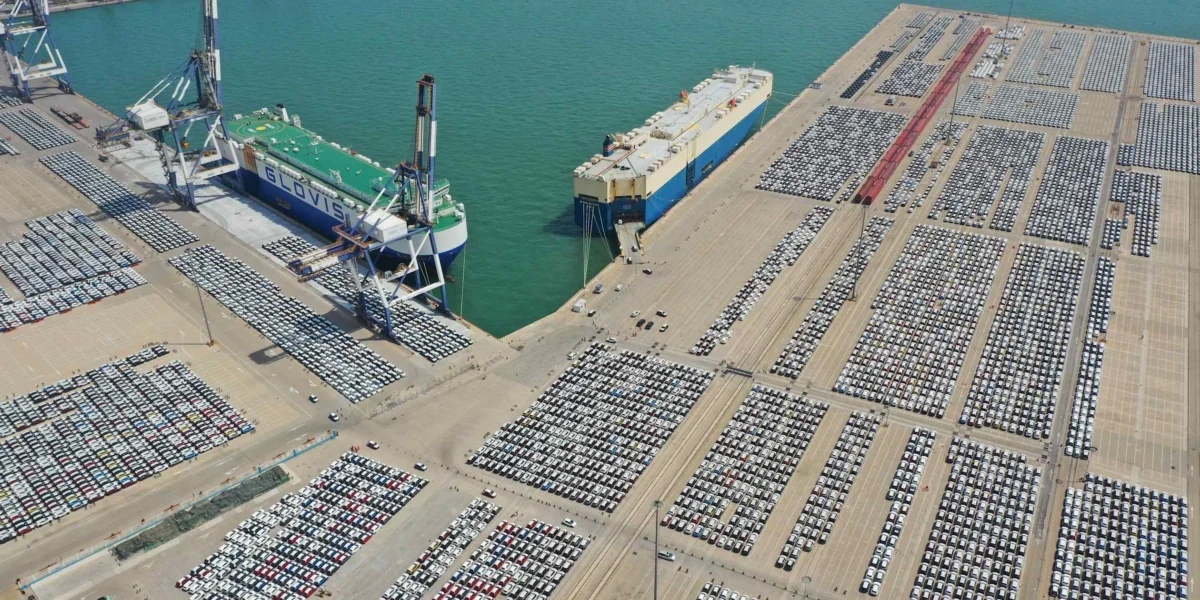
European companies operating in China are urgently calling on Beijing to address persistent issues of overcapacity and intense price competition, painting a stark picture of an uphill battle to rebalance trade dynamics ahead of critical bilateral discussions scheduled for next month. A recent report, released on Tuesday, underscores the growing apprehension among European businesses that their domestic industries are facing significant headwinds due to a surge of competitively priced Chinese goods. The concerns highlight a complex web of economic challenges that threaten to further strain already delicate trade relations between the European Union and China.
Deepening Concerns Over Economic Imbalance
The core of the European business community’s anxiety lies in the perceived unfair competitive landscape. European manufacturers report that they are struggling to compete with Chinese counterparts who benefit from state subsidies, lower production costs, and a regulatory environment that, in some instances, appears to favor domestic players. This disparity is not a new phenomenon, but recent economic shifts and China’s increasing export prowess in sectors like electric vehicles (EVs), solar panels, and steel have amplified these concerns to a critical level.
The report, details of which were not fully disclosed but have been described as comprehensive by industry insiders, reportedly outlines a lengthy list of specific grievances. These include allegations of dumping, intellectual property theft, forced technology transfers, and discriminatory market access for European firms. The sheer breadth of these concerns suggests that addressing the trade imbalance will require a multi-faceted approach, extending far beyond simple tariff adjustments.
A Chronology of Rising Tensions
The current trade friction is not an overnight development. It has been simmering for years, with key milestones marking its escalation:
- Early 2010s: Growing awareness within European industrial sectors of China’s rapidly expanding manufacturing capacity and increasingly aggressive export strategies.
- Mid-2010s: The European Union begins to voice more formal concerns about trade imbalances and unfair competition, often through industry-specific complaints and diplomatic channels.
- Late 2010s: The global trade landscape becomes more volatile, with the US-China trade war creating ripple effects that also impact European trade relations. European companies operating in China start to feel the pinch of intensified competition as Chinese firms seek new markets.
- Early 2020s: The COVID-19 pandemic, while initially disrupting global supply chains, also led to a surge in demand for certain Chinese manufactured goods. Post-pandemic, China’s manufacturing engine has shown remarkable resilience, further fueling concerns about overcapacity.
- 2023-2024: A significant uptick in official pronouncements from European leaders and business associations highlighting the urgency of addressing trade imbalances. The upcoming talks in November are seen as a crucial opportunity to lay the groundwork for more concrete solutions.
Supporting Data: The Growing Tide of Chinese Exports
The concerns are not merely anecdotal. A closer examination of trade data reveals a significant increase in the volume and value of Chinese exports across various key sectors. For instance, recent analyses indicate that China’s share in the global market for electric vehicles has surged dramatically in the past few years. Reports from market research firms suggest that Chinese EV manufacturers are not only dominating their domestic market but are also rapidly expanding their presence in Europe, often with price points that are difficult for European automakers to match.
Similarly, the solar panel industry has seen a dramatic influx of Chinese-made products, often at significantly lower costs than those produced in Europe. While this has driven down the cost of renewable energy globally, it has also led to the closure of some European solar manufacturing plants, raising fears of a deindustrialization in strategic sectors.
Trade statistics from the World Trade Organization (WTO) and national statistical agencies consistently show a widening trade deficit for the EU with China. In 2023, for example, preliminary figures suggest that the EU’s trade deficit with China reached record highs in several product categories, including manufactured goods, machinery, and electronics. This persistent imbalance is a central point of contention, with European policymakers and businesses arguing that it is unsustainable and indicative of structural issues in the trading relationship.
The Overcapacity Conundrum
The issue of overcapacity in China is a complex one, stemming from years of strategic industrial policy, significant state investment, and a focus on export-led growth. While China’s manufacturing prowess has lifted millions out of poverty and contributed to global economic growth, it has also led to situations where domestic demand cannot absorb the sheer volume of goods produced. This excess production often finds its way into international markets, creating downward pressure on prices and impacting industries in importing countries.
In sectors like steel and chemicals, overcapacity has been a long-standing issue, but it has now extended to more advanced industries. The rapid build-out of production facilities, often with state backing, means that Chinese companies can operate at a scale and with a cost structure that makes it challenging for competitors in higher-cost economies to keep pace.
Reactions and Repercussions
The report’s release is expected to add further weight to ongoing diplomatic efforts. European governments, including Germany, France, and Italy, have been vocal in their calls for a more level playing field. Industry associations, such as BusinessEurope, have consistently highlighted the need for China to address these structural issues.
"We are facing a situation where our industries are being hollowed out by unfair competition," stated a spokesperson for a major European automotive industry association, speaking on condition of anonymity due to the sensitive nature of the discussions. "We are not asking for protectionism, but for fair competition based on agreed-upon international trade rules. The current situation is unsustainable for many of our members."
China, for its part, has consistently maintained that its economic policies are aimed at fostering domestic growth and that its companies are competitive on their own merits. Beijing has often argued that European concerns are protectionist in nature and that the trade imbalance is a natural consequence of global economic specialization. However, there are signs that China is also aware of the potential for these trade disputes to escalate and impact its own economic interests. Reports from Chinese state media have acknowledged the importance of maintaining stable trade relations with major partners like the EU.
Broader Impact and Implications
The implications of this trade friction extend far beyond the immediate concerns of individual companies. A sustained inability to resolve these issues could lead to:
- Increased Protectionism: If diplomatic channels fail, there is a significant risk of the EU resorting to more protectionist measures, such as higher tariffs or quotas, on Chinese imports. This could trigger retaliatory measures from China, leading to a broader trade war that would harm both economies and global trade.
- Geopolitical Realignment: The economic disputes are increasingly intertwined with geopolitical considerations. Concerns about China’s growing economic influence are part of a broader debate about global power dynamics and the future of international trade architecture.
- Supply Chain Diversification: European companies are already exploring strategies to diversify their supply chains away from over-reliance on China. This could lead to a reconfiguration of global manufacturing and trade patterns, with potential long-term economic consequences.
- Technological Decoupling: The intense competition in strategic sectors like EVs and renewable energy technologies could accelerate a trend towards technological decoupling, where different economic blocs develop and promote their own standards and technologies, potentially fragmenting the global market.
The upcoming talks in November represent a critical juncture. The success of these discussions will depend on both sides’ willingness to engage in good-faith negotiations and to find mutually agreeable solutions that address the legitimate concerns of European businesses while respecting China’s economic development goals. The lengthy list of European grievances underscores the depth of the challenge, signaling that a swift resolution will require significant political will and innovative policy approaches from both Beijing and Brussels. The future of EU-China trade, and indeed global trade dynamics, may well hinge on the outcomes of these crucial deliberations.
