

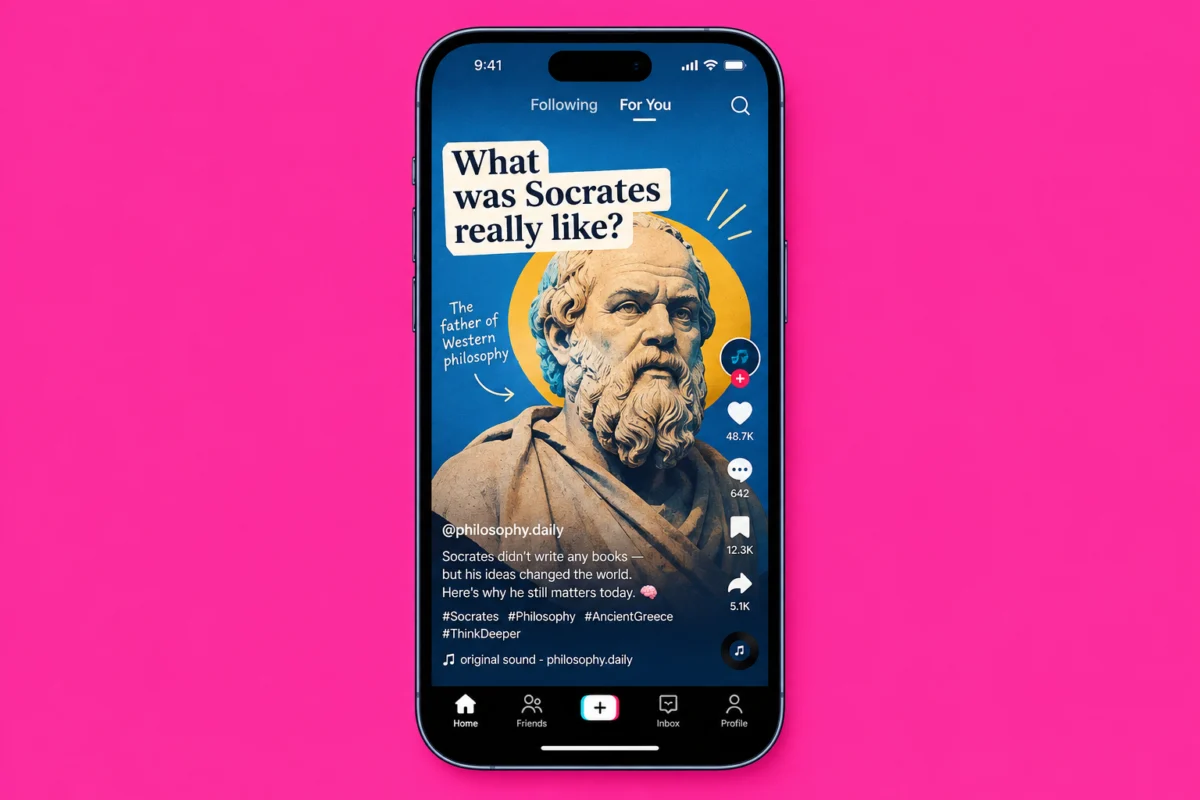
The modern digital age has frequently been characterized by a collective lament over dwindling attention spans and minds seemingly rewired for instant gratification, with the pervasive act of "doomscrolling" often cited as the culprit for our diminished capacity to engage with lengthy texts or concentrate on academic pursuits. This widespread concern has traditionally led to calls for digital detoxes and a return to analog study methods. However, a Palo Alto-based startup named ScrollEd is proposing a radical shift in perspective: what if the solution isn’t to cease scrolling, but rather to fundamentally redefine what we scroll through? This innovative approach is currently being presented on a prominent stage, as ScrollEd pitches its vision in the highly competitive TechCrunch Disrupt Startup Battlefield 200 competition, asserting that if students are reluctant to open traditional textbooks, then the textbooks themselves must evolve to meet students where they are – as an engaging, scrollable feed.
The Genesis of an Idea: Meeting Learners in the Digital Realm
ScrollEd’s core offering is an intuitive application designed to convert any static text file, from dense academic PDFs to comprehensive textbooks, into a dynamic feed that consciously mimics the addictive user experience of popular short-form video platforms like Instagram Reels and TikTok. As users swipe upwards, content unfolds through a rich tapestry of AI-generated video clips, spoken audio explanations, concise text summaries, and interactive quizzes. A simple upward swipe introduces a new topic, fostering broad exploration, while a sideways swipe allows for a deeper dive into the current subject matter, culminating in a knowledge-testing quiz. This dual navigation strategy is central to ScrollEd’s promise of balancing quick information absorption with opportunities for in-depth understanding.
The impetus behind ScrollEd emerged from a shared dissatisfaction experienced by its co-founders, Utsav Gupta and Rebecca Neff. Both students themselves – Gupta pursuing AI and human purpose at Stanford University, and Neff studying computer science at the University of Pennsylvania – they recognized the pervasive, yet often unfulfilling, cycle of late-night doomscrolling. This personal observation sparked a critical question: could the very mechanics of engaging, scrollable content be repurposed for constructive learning? "The younger generation is increasingly going short form, vertical feed only (especially the 18-year-olds we’ve spoken to!), and this poses challenges for any kind of media that requires depth," Utsav Gupta explained in an email to TechCrunch. He elaborated on the startup’s foundational philosophy: "We want to meet them where they are… We just have to be deliberate about how we use it and choose not to maximize engagement on the platform." This deliberate choice to prioritize substantive learning over raw engagement metrics marks a significant departure from the business models of many mainstream social platforms. Gupta further articulated the desire to seamlessly integrate depth: "A short video can make you curious; following that curiosity can mean searching for another explanation or leaving the app. We wanted going deeper to be as easy as moving to the next video." The husband-and-wife team bootstrapped ScrollEd this year, transforming a personal insight into a potentially transformative educational tool.
Navigating the Attention Economy: A Data-Driven Imperative
The premise of ScrollEd is deeply rooted in contemporary behavioral science and market trends. Studies consistently highlight a profound shift in human attention spans, particularly among digital natives. Research from Microsoft Corporation in 2015, for example, suggested that the average human attention span had dropped from 12 seconds in 2000 to 8 seconds, now reportedly shorter than that of a goldfish. While this particular comparison has been debated, the underlying trend of fragmented attention and a preference for rapidly digestible content is undeniable. A more recent analysis by Statista indicates that individuals globally spend an average of over 2.5 hours daily on social media platforms, with short-form video consumption soaring. TikTok alone reported over 1.7 billion users by 2024, demonstrating the immense gravitational pull of vertically-oriented, rapidly evolving content.
This pervasive digital environment has fundamentally reshaped how younger generations, specifically Gen Z (born roughly between 1997 and 2012), interact with information. They are digital natives who have grown up with smartphones as an extension of their reality, accustomed to instant access, hyper-personalization, and multi-modal content delivery. Traditional textbooks, with their linear narratives and static format, often struggle to compete for attention against the dynamic, interactive, and endlessly refreshed feeds of social media. Educational institutions worldwide face the challenge of engaging students who are fluent in digital communication but may find conventional learning materials cumbersome or unstimulating. ScrollEd positions itself as a bridge over this generational learning chasm, not by fighting the tide of digital engagement, but by redirecting its powerful current towards productive ends. The platform’s design, which leverages AI to transform dry academic material into an engaging, multi-sensory experience, is a direct response to this evolving educational landscape.
The Expanding Ed-Tech Landscape and ScrollEd’s Niche
The global educational technology (ed-tech) market has experienced exponential growth, particularly accelerated by the COVID-19 pandemic which forced a rapid pivot to online learning. Valued at approximately $298 billion in 2023, the market is projected to exceed $1 trillion by 2030, driven by innovations in artificial intelligence, personalized learning, and virtual reality. Within this booming sector, ScrollEd seeks to carve out a distinctive niche. While established platforms like Coursera, edX, and Khan Academy offer extensive courses and learning resources, their format often remains tethered to more traditional lecture-and-text paradigms, albeit delivered digitally. Microlearning platforms and apps like Duolingo have successfully gamified language acquisition, demonstrating the power of short, engaging bursts of content. ScrollEd takes this concept further by applying the "feed" metaphor to virtually any textual content, from a high school biology textbook to complex corporate training manuals.
The startup’s business model is designed to cater to diverse segments, employing a freemium approach. A free consumer feed provides accessible content, while a paid "ScrollEd Pro" subscription unlocks advanced features and deeper content libraries for individual learners. For institutions – including universities, K-12 schools, and corporate training departments – ScrollEd offers annual licenses. This institutional model provides a robust value proposition: not only do educators gain a highly engaging platform to deliver their material, but they also receive comprehensive reports on student engagement, lesson progress, and other critical data points. This data-driven feedback loop allows institutions to tailor their educational strategies, assess curriculum effectiveness, and identify areas where students might be struggling, moving beyond mere content delivery to actionable insights. This focus on institutional adoption, alongside a direct-to-consumer offering, positions ScrollEd for broad market penetration.
Beyond the Scroll: A Vision for Responsible Digital Engagement
ScrollEd’s ambition extends beyond merely adapting content to a new format. The founders envision a platform that could fundamentally reshape digital interaction itself. "The ambition is a social network that’s better for you," Gupta stated, hinting at a future where the platform could foster community around learning, allowing users to share insights, collaborate on topics, and engage in constructive intellectual discourse – a stark contrast to the often polarizing and superficial interactions prevalent on conventional social media.
The development roadmap for ScrollEd reflects this expansive vision. In the immediate months following its consumer launch at TechCrunch Disrupt, the company plans to focus on several key areas. Building out a comprehensive lesson library will be crucial, requiring meticulous curation and, importantly, a robust "source-checking workflow" to ensure the accuracy and reliability of AI-generated content. This commitment to factual integrity is paramount, especially when dealing with educational materials and leveraging AI, which can sometimes be prone to generating misinformation or "hallucinations." Simultaneously, the startup intends to develop pilot programs with educational institutions, gathering feedback and refining the platform based on real-world usage. A long-term goal involves building advanced infrastructure capable of assessing individual learners’ progress and adapting content delivery to their specific needs and learning styles. This personalized learning pathway, powered by AI, promises to optimize educational outcomes, moving away from a one-size-fits-all approach towards truly individualized instruction.
The TechCrunch Disrupt Platform: A Catalyst for Innovation
ScrollEd’s participation in the TechCrunch Disrupt Startup Battlefield 200 is a significant milestone. TechCrunch Disrupt is one of the most prestigious technology conferences globally, renowned for showcasing groundbreaking startups and attracting a confluence of venture capitalists, tech media, and industry leaders. The Startup Battlefield, in particular, is a highly competitive arena where selected startups pitch their innovations to a panel of expert judges and a global audience. Alumni of the Battlefield include now-household names like Dropbox, Mint, and Yammer, underscoring the potential for significant visibility and investment opportunities for participating companies. For ScrollEd, this platform provides not only invaluable exposure but also a chance to validate its concept, attract early adopters, and potentially secure crucial funding to scale its operations. Gupta’s playful quip, "We’re hoping to ‘disrupt’ social media and short form!", encapsulates the audacious spirit of the event and ScrollEd’s bold aspirations within it.
The implications of ScrollEd’s approach are broad and multifaceted. For educators, it offers a novel method to combat student disengagement, potentially making learning more accessible and enjoyable for a generation raised on dynamic digital content. For learners, it promises a more efficient and less tedious way to absorb complex information, transforming study sessions from a chore into an interactive experience. For the broader tech industry, ScrollEd presents a case study in how the addictive mechanics of social media can be re-engineered for beneficial outcomes, challenging the prevailing narrative that digital engagement is inherently detrimental to deep thought. As the company moves from its launch at Disrupt into active development and market penetration, the educational world will be watching closely to see if ScrollEd can indeed turn the tide of digital distraction into a powerful current for knowledge acquisition.
