

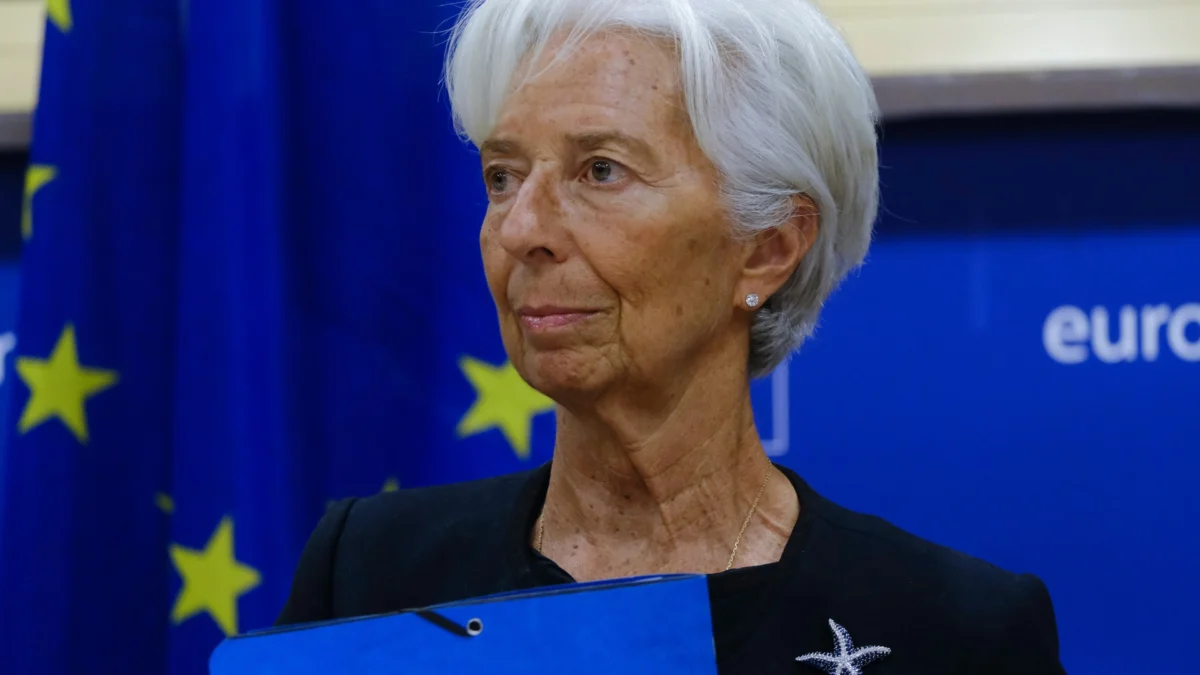
European Central Bank (ECB) President Christine Lagarde was instrumental in preventing the cryptocurrency exchange giant Binance from establishing a significant operational foothold within the European Union, according to a comprehensive report by The Wall Street Journal. The newspaper’s investigation, published on Thursday, revealed that Binance was on the verge of securing the necessary approvals to operate across the trading bloc. However, these plans were reportedly halted after ECB President Lagarde intervened, leveraging her influence to block the exchange’s expansion.
The regulatory landscape for cryptocurrency service providers in the EU is governed by the Markets in Crypto-Assets (MiCA) regulation. Under MiCA, any entity seeking to offer crypto-asset services within the EU must obtain a specific MiCA license. Binance, the world’s largest cryptocurrency exchange by trading volume, has not secured such a license. This regulatory hurdle was highlighted when Binance announced in June its withdrawal of a MiCA application in Greece, a move that underscored the challenges the exchange faced in navigating the EU’s evolving digital asset framework.
Sources cited in The Wall Street Journal report, who spoke on condition of anonymity, indicated that Lagarde’s primary motivation was to keep Binance, an entity with a history of regulatory scrutiny and a guilty plea to financial crime violations in the United States, out of the European Union. This stance aligns with Lagarde’s long-held skepticism towards cryptocurrencies like Bitcoin, which she has publicly characterized as "highly speculative assets" and tools potentially used for illicit activities such as money laundering. Her pronouncements in 2021, where she asserted that central banks would never hold Bitcoin, further solidified her cautious approach to decentralized digital currencies.
Lagarde’s Vision for a Digital Euro and Central Bank Digital Currencies (CBDCs)
Lagarde’s opposition to private cryptocurrencies stands in stark contrast to her advocacy for Central Bank Digital Currencies (CBDCs). A CBDC represents a digital form of a nation’s fiat currency, such as the euro or the U.S. dollar, and is issued and backed by the central bank. Many nations globally are currently in various stages of research, development, and pilot programs for their own CBDCs.
Under Lagarde’s leadership, the European Union has been actively advancing its own digital euro project. She has repeatedly emphasized the strategic importance of a digital euro, positioning it as a crucial element for bolstering Europe’s financial autonomy. This initiative also appears to be a strategic move to counter the growing influence of privately issued stablecoins, which are digital currencies pegged to a stable asset, often a fiat currency like the U.S. dollar.
However, the concept of CBDCs has not been without its critics. Proponents of Bitcoin and other decentralized cryptocurrencies often express concerns that CBDCs could be leveraged for increased surveillance of citizens, potentially eroding financial privacy. Echoing some of these concerns, former U.S. President Donald Trump took decisive action during his tenure by signing an executive order that effectively banned the development and implementation of a U.S. CBDC.
Concerns Over Stablecoin Dominance and Financial Autonomy
The Wall Street Journal report further elaborated on Lagarde’s concerns, suggesting that she was particularly worried about Binance’s potential to entrench the dominance of dollar-denominated stablecoins within the European economic landscape. Such a scenario, in her view, would undermine efforts to promote and strengthen euro-denominated digital assets and could diminish the EU’s financial sovereignty.
Binance, as the world’s largest cryptocurrency exchange, facilitates the daily trading of billions of dollars worth of stablecoins. Its extensive user base and vast trading volumes give it significant influence over the digital asset market. The potential for this influence to disproportionately favor dollar-based stablecoins over European alternatives was a significant factor in Lagarde’s decision-making.
Binance’s Regulatory Challenges and Past Violations
Binance has faced considerable regulatory scrutiny globally due to its operational practices and past legal entanglements. In 2023, the company and its founder and former CEO, Changpeng Zhao (often known as "CZ"), pleaded guilty to anti-money-laundering violations in the United States. This resulted in a record-breaking $4.3 billion fine, a substantial penalty that underscored the severity of the charges.
Despite these significant legal and financial repercussions, Binance has publicly stated its continued commitment to seeking regulatory authorization in other EU member states. The exchange has indicated that it is actively working towards obtaining the necessary licenses to operate within the bloc, suggesting an ongoing effort to adapt to the stringent regulatory environment.
Timeline of Events and Regulatory Context
The developments leading to Binance’s thwarted expansion in the EU can be traced through a series of regulatory actions and statements:
- Pre-2021: Binance establishes itself as a dominant global cryptocurrency exchange, expanding its services to various international markets.
- 2021: ECB President Christine Lagarde publicly expresses strong reservations about Bitcoin, calling it a "highly speculative asset" and a potential tool for money laundering, while also highlighting the potential of CBDCs.
- Ongoing: The European Union embarks on developing its comprehensive regulatory framework for digital assets, culminating in the MiCA regulation.
- June 2023: Binance withdraws its application for a MiCA license in Greece, signaling early difficulties in securing regulatory approval within the EU.
- Late 2023: Binance and its former CEO, Changpeng Zhao, plead guilty to anti-money-laundering violations in the U.S. and agree to a $4.3 billion settlement.
- Early 2024: Reports emerge, notably from The Wall Street Journal, detailing Christine Lagarde’s intervention to prevent Binance from operating within the EU, citing concerns over regulatory compliance and the dominance of dollar-based stablecoins.
Broader Implications for the European Digital Asset Landscape
Lagarde’s decisive action has significant implications for the future of the cryptocurrency market within the European Union. By effectively blocking a major global player like Binance, the ECB, under her leadership, is signaling a clear preference for regulated entities that adhere to stringent anti-money-laundering and financial crime prevention standards. This move could:
- Accelerate MiCA Compliance: The strong stance taken by the ECB may prompt other crypto exchanges to prioritize obtaining MiCA licenses and enhancing their compliance measures to operate within the EU.
- Boost European CBDC Development: The focus on financial autonomy and countering dollar-based stablecoins could further energize the development and rollout of the digital euro, positioning it as a more prominent digital currency alternative within the bloc.
- Create Opportunities for Localized Competitors: The absence of a dominant global player like Binance could create space for European-based crypto service providers to emerge and gain market share, provided they meet regulatory requirements.
- Influence Global Regulatory Trends: The EU’s robust regulatory approach, spearheaded by influential figures like Lagarde, could serve as a model or catalyst for similar regulatory actions in other jurisdictions, potentially shaping the global regulatory landscape for digital assets.
- Impact on Stablecoin Market: The emphasis on preventing dollar-based stablecoin dominance could lead to increased scrutiny and potential restrictions on such assets, encouraging the development and adoption of euro-denominated stablecoins or other regulated digital euro alternatives.
Binance’s future in the EU remains uncertain. While it has expressed intentions to secure MiCA authorization in other member states, the significant regulatory hurdles and the high-profile opposition from the ECB suggest a challenging path ahead. The exchange’s past legal issues and its market dominance present a complex regulatory puzzle that European authorities are determined to manage cautiously, prioritizing financial stability and regulatory integrity over unchecked growth. The ongoing saga highlights the critical juncture at which traditional financial institutions and regulators are engaging with the rapidly evolving world of digital assets, seeking to harness their potential while mitigating associated risks.
