

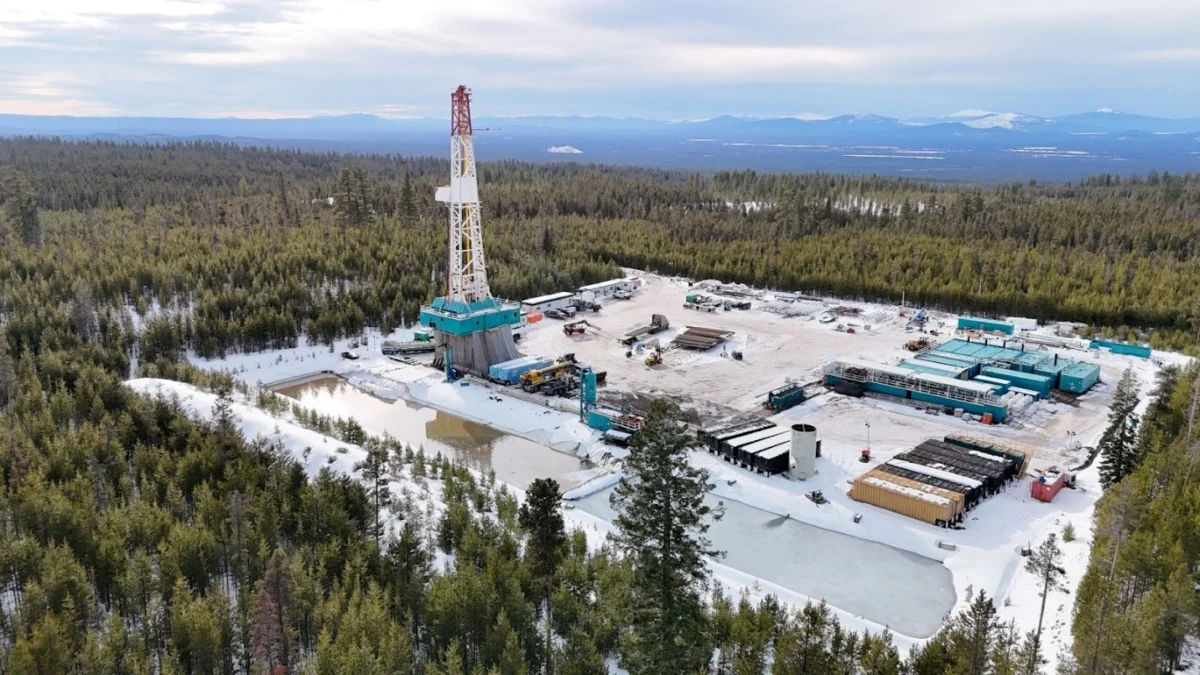
Geothermal startup Mazama Energy has successfully closed an oversubscribed Series B funding round, raising $135 million. This significant capital injection is poised to propel the company’s ambitious plans to develop horizontal wells capable of tapping into super-hot rock formations, generating substantial amounts of electricity and positioning enhanced geothermal systems (EGS) as a critical player in the global energy transition. The funding round signals a robust investor confidence in Mazama Energy’s innovative approach to harnessing Earth’s internal heat, a method promising continuous, reliable, and carbon-free baseload power.
A New Era for Geothermal: Funding Fuels Innovation
The $135 million Series B round saw leadership from Centaurus Capital and Doerr Capital, underscoring a strong belief in Mazama Energy’s technological prowess and market potential. Strategic investments from energy giants ConocoPhillips and Shell Ventures further validate the growing interest from established players in advanced geothermal solutions. Existing investors, including the influential Khosla Ventures and Gates Frontier, reaffirmed their commitment, while new participants such as SiteGround Capital, H. Barton Asset Management, and the Jeffrey and Marieke Rothschild Foundation joined the fold. The participation of such a diverse group of investors, ranging from venture capital to corporate strategics and philanthropic foundations, highlights the broad appeal and perceived viability of Mazama’s technology. Khosla Ventures, a long-time advocate for disruptive climate technologies, incubated Mazama Energy, providing initial support and strategic guidance.
This fresh capital infusion is earmarked for the critical next phase of development: deploying horizontal wells designed to access super-hot rocks. These advanced wells are projected to generate an impressive 15 megawatts (MW) of electricity per well, a significant leap in efficiency and output compared to conventional geothermal methods. The move towards horizontal drilling is a key innovation, allowing for greater contact with the hot rock reservoir and optimizing heat extraction.
Ambitious Targets: Powering the Future Grid
Mazama Energy’s development timeline is aggressive, with plans to commence electricity generation as early as next year. The company’s flagship site in Oregon holds immense promise, with a revised estimate of potential electricity production reaching an astounding 10 gigawatts (GW). This represents a sharp upward revision from the company’s previous estimate of 5 GW, made public last year by investor Vinod Khosla. Such an increase in projected capacity underscores rapid advancements in understanding the resource and the efficacy of Mazama’s drilling and extraction techniques. To put 10 GW into perspective, it is roughly equivalent to the output of ten large nuclear power plants or powering millions of homes, making it a potentially transformative energy source for the region and beyond.
The company aims to complete the full development of its first Oregon site by 2030, targeting an operational capacity of 200 MW by that time. While the 200 MW by 2030 is a near-term operational goal, the 10 GW figure represents the ultimate long-term potential of the site, showcasing the scalability of their technology. In addition to the Oregon project, Mazama has already secured land for a second development, signaling a clear roadmap for expansion and replication of its innovative geothermal model. This dual-track approach to site development suggests a robust strategy for rapid scaling and market penetration.
Enhanced Geothermal: The "Dark Horse" in the Energy Race
Enhanced geothermal startups, including Mazama Energy, are increasingly being recognized as a critical "dark horse" in the intensifying battle to provide reliable power for burgeoning energy demands, particularly from energy-intensive applications like AI data centers. While much of the tech industry and data center developers have traditionally leaned on natural gas for its reliability and relatively low cost, EGS companies are rapidly advancing their technology, offering a truly 24/7 clean energy alternative.
Traditional geothermal projects typically rely on naturally occurring hot water or steam reservoirs close to the Earth’s surface. EGS, however, targets much deeper and hotter rock formations, often where natural permeability or fluid pathways are insufficient. These systems create or enhance permeability through advanced drilling and hydraulic stimulation techniques, circulating water through the hot rock to extract heat. The key differentiator for companies like Mazama is their pursuit of "super-hot rock" – formations that reach extreme temperatures.
Unlocking Supercritical Fluid: A Technological Breakthrough
Mazama Energy exemplifies this cutting-edge approach. The company has demonstrated remarkable drilling efficiency, penetrating over 10,000 feet in just 15 days, on its way to depths of approximately 15,000 feet. At these extraordinary depths, the Earth’s crust holds immense heat, reaching temperatures of 750°F (400°C). At such high temperatures and pressures, water transcends its typical liquid or gaseous states, entering a "supercritical" phase.
Supercritical fluid possesses unique properties; it behaves neither as a conventional liquid nor a gas, but rather as a highly efficient heat transfer medium. This state allows it to absorb significantly more energy than ordinary steam, leading to dramatically improved power generation efficiency. Mazama Energy estimates that by utilizing supercritical fluid, each of its wells can produce up to 10 times more power than traditional geothermal technologies. This technological leap is not merely incremental but represents a paradigm shift in geothermal energy extraction, promising unprecedented energy yields from individual wells. The engineering challenges involved in handling and managing fluids at such extreme temperatures and pressures are substantial, highlighting the sophisticated capabilities Mazama has developed.
The Immense Global Potential of Super-Hot Rock
The potential payoff from tapping into super-hot rock resources is staggering. According to research from the University of Twente and the Clean Air Task Force, harnessing just 1% of the world’s super-hot rock resources could generate more than 63 terawatts (TW) of electricity. To put this into context, the current global electricity consumption is approximately 25-30 terawatt-hours per year. This means that a mere fraction of the Earth’s deep heat could theoretically meet global energy demand many times over, offering a virtually inexhaustible and geographically widespread source of clean energy. This underscores the transformative potential of EGS technology if successfully scaled globally.
Geothermal’s Role in a Sustainable Energy Future
Geothermal energy holds several distinct advantages that make it particularly attractive for future energy grids. Unlike solar and wind power, which are intermittent and dependent on weather conditions, geothermal power plants can operate 24 hours a day, 7 days a week, providing a consistent "baseload" power supply. This reliability is crucial for grid stability and for powering critical infrastructure, including the rapidly expanding network of AI data centers that require constant, high-quality power.
The global demand for electricity is projected to surge in the coming decades, driven by electrification of transport, industry, and the digital economy. AI data centers, in particular, are expected to consume unprecedented amounts of energy. The International Energy Agency (IEA) estimates that global data center electricity consumption could double by 2026 compared to 2022 levels. Providing this power with clean, reliable sources is paramount to avoid exacerbating climate change. EGS offers a compelling solution, providing both sustainability and the necessary uptime for these critical facilities.
Furthermore, geothermal power plants have a small land footprint compared to other renewable energy sources like large-scale solar farms or wind parks. They also emit virtually no greenhouse gases during operation, contributing significantly to decarbonization efforts. The environmental benefits extend beyond emissions, as geothermal operations typically have minimal water requirements, especially in closed-loop systems, making them suitable for water-stressed regions.
Strategic Investments and Industry Implications
The participation of major oil and gas companies like ConocoPhillips and Shell Ventures in Mazama’s funding round is particularly noteworthy. It signals a strategic pivot and diversification effort by these energy giants, who are increasingly investing in renewable and clean energy technologies as part of their long-term sustainability goals. Their deep expertise in drilling, reservoir management, and large-scale energy project development could prove invaluable to Mazama Energy as it scales its operations. These partnerships could also accelerate the adoption and deployment of EGS technologies by leveraging existing infrastructure and supply chains.
The oversubscribed nature of the Series B round reflects a broader trend of increasing investor interest in climate tech and deep tech solutions. As the urgency of climate change intensifies and technological advancements make once-futuristic concepts viable, capital is flowing into companies that promise scalable, impactful solutions. Mazama Energy’s success underscores the growing recognition of enhanced geothermal as a mature and promising technology ready for significant deployment.
The Road Ahead: Challenges and Opportunities
While the outlook for Mazama Energy and the EGS sector is highly optimistic, significant challenges remain. Deep drilling operations are inherently complex and capital-intensive, requiring advanced engineering and geological expertise. Managing extreme temperatures and pressures, as well as mitigating potential seismic activity associated with hydraulic stimulation, are ongoing areas of research and development for the industry. However, continuous innovation in drilling technology, materials science, and seismic monitoring is steadily addressing these challenges.
The path to commercialization and widespread adoption for EGS will require sustained investment, regulatory support, and continued technological refinement. Mazama Energy’s successful funding round is a crucial step on this journey, providing the resources necessary to push the boundaries of what is possible in geothermal energy. By leveraging super-hot rock formations and supercritical fluid technology, Mazama is not just building power plants; it is laying the groundwork for a future where clean, reliable, and abundant energy is accessible 24/7, fundamentally reshaping the global energy landscape.
