

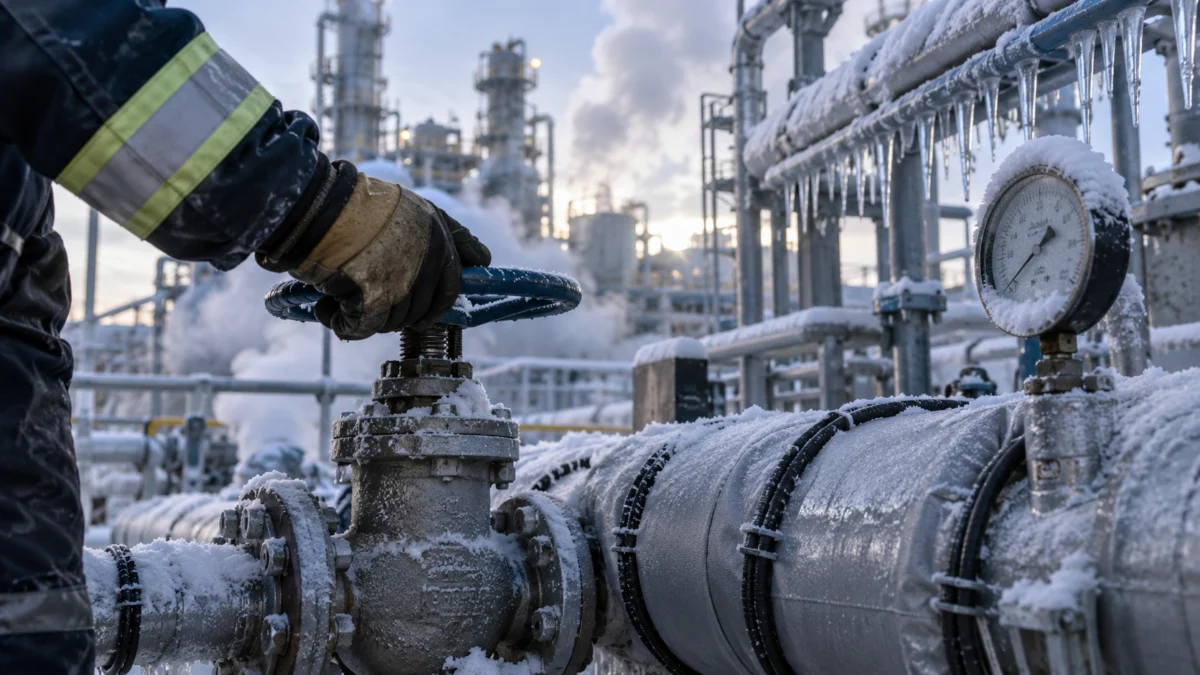
The 2026 Arctic cold period, characterized by the successive arrival of Winter Storms Fern and Gianna, served as a definitive stress test for the United States’ Bulk-Power System, revealing a grid that is becoming increasingly resilient yet remains precariously balanced against rising demand and extreme weather volatility. A comprehensive joint review released this month by the Federal Energy Regulatory Commission (FERC) and the North American Electric Reliability Corporation (NERC) indicates that while the national grid avoided the catastrophic widespread failures seen in previous years, the margin for error is narrowing. Regulators warn that the successful navigation of the 2026 storms should not be viewed as a final victory, but rather as a reprieve and a stern warning for the 2027 winter season.
A Legacy of Cold: The Evolution of Grid Resilience
The performance of the grid during Fern and Gianna must be understood through the lens of the previous 15 years, a period marked by a series of "once-in-a-generation" storms that occurred with alarming frequency. The standard for grid vulnerability was set by Winter Storm Uri in February 2021, which caused a near-total collapse of the Texas Interconnection and resulted in hundreds of fatalities. This was followed by Winter Storm Elliott in December 2022, which saw massive generation failures across the Eastern Interconnection and prompted a nationwide re-evaluation of winterization standards.
By the time the 2025 Arctic events—Winter Storms Blair, Cora, Demi, and Enzo—arrived, the industry had begun implementing more rigorous cold-weather protocols. However, those storms still exposed significant gaps in the coordination between natural gas suppliers and electric grid operators. The 2026 events, Fern and Gianna, represented the first major test of the subsequent infrastructure hardening and regulatory mandates.
The FERC-NERC report highlights a trend of incremental improvement. While unplanned generator outages peaked at 68,169 MW on January 26, 2026, this figure was slightly lower than the 71,022 MW peak recorded during the January 2025 events and significantly improved compared to the 90,500 MW lost during Winter Storm Elliott. This downward trend in peak outages, despite similar or more severe temperatures, suggests that the industry’s focus on "inside the fence" improvements is yielding tangible results.
Regional Performance: Successes and Emerging Vulnerabilities
The performance of the grid was not uniform across the United States, with different regions showcasing both the benefits of investment and the risks of shifting generation mixes.
The Eastern Interconnection and New England
The Eastern Interconnection saw a notable improvement in reliability. Peak outages dropped to 49,701 MW, a significant reduction from the 57,396 MW seen in 2025 and the massive losses during Elliott. In New England, ISO-NE faced unique logistical challenges due to the duration of the cold snap. Fast-start oil-fired units, typically used for brief peaks, were forced to run for extended periods, leading to the rapid depletion of essential consumables like demineralized water and ammonia used for emissions control. In a remarkable display of cross-regional coordination, ISO-NE managed to source demineralized water trailers from as far away as Seattle to keep plants operational.
The Texas Interconnection (ERCOT)
In contrast to the Eastern Interconnection, Texas experienced an increase in outages. Forced outages in the ERCOT footprint rose to 19,472 MW, up from 13,990 MW the previous year. Most notably, wind generation outages more than doubled, reaching 12,896 MW. This spike was attributed to icing events and the inherent volatility of renewables during extreme pressure systems. The reliance on thermal units became the bedrock of the Texas grid during the height of Storm Fern; gas-fired generation surged 84 GW above typical winter levels, while coal and fuel oil provided an additional 40 GW and 14 GW respectively to cover the shortfall.
The TVA Success Story
The Tennessee Valley Authority (TVA) provided perhaps the most compelling evidence that proactive spending saves systems. Following the failures of Winter Storm Elliott, TVA invested approximately $100 million in physical hardening, including freeze protection for sensing lines and the installation of wind-blocking structures. During the 2026 storms, TVA reported that cold-related unit outages lasted only between 45 minutes and four hours—a stark contrast to the multi-day failures of the past. TVA’s strategy of test-running dual-fuel units on backup fuel during the preceding autumn was also cited as a key factor in their success.
The Interdependence of Gas and Electricity
One of the primary concerns highlighted by federal regulators is the "tight coupling" of the natural gas and electric systems. During the 2026 storms, dry natural gas production fell by as much as 14% nationally. While this was less severe than the production freezes seen during Uri or Elliott, it underscored the vulnerability of the fuel supply chain.

The natural gas system "bent but did not break," according to the report. Force majeure events were limited, and the system met a staggering demand by drawing 359 billion cubic feet (Bcf) from storage in a single week ending January 30, tying an all-time weekly record. However, NERC President and CEO Jim Robb noted that the system was brought "close to the edge." The prolonged nature of Fern and Gianna meant that storage levels were drawn down rapidly, and the electric grid’s heavy reliance on gas-fired "peakers" put immense pressure on pipeline pressure and delivery schedules.
The report emphasizes that as coal plants continue to retire and are replaced by gas and intermittent renewables, the "fuel security" of the gas system becomes synonymous with the "reliability" of the electric grid.
Growing Demand: The 2027 Challenge
Looking ahead to 2027, the primary concern for regulators is not just the weather, but the rapidly escalating demand for electricity. The U.S. Energy Information Administration (EIA) has released sobering forecasts regarding the nation’s energy consumption.
Electricity sales are expected to reach a record 4,135 billion kilowatt-hours (kWh) by the end of 2026, representing a 2% increase over 2025. This growth is projected to continue, with another 2% climb to 4,211 billion kWh in 2027. This surge is driven by two main factors: the explosion of data center development—fueled by the artificial intelligence boom—and a significant increase in domestic manufacturing activity.
To meet this demand, generation must also reach record levels. The EIA forecasts that U.S. electricity generation will rise to 4,368 billion kWh in 2026, followed by a further 1.7% increase in 2027. Natural gas is slated to remain the dominant fuel source, accounting for roughly 40% of all generation. This means that any disruption in the gas supply during a 2027 winter event will have a mathematically larger impact on the grid than it did in 2026, simply because the baseline load is higher.
Meteorological Projections and the El Niño Factor
The reliability of the 2027 grid will also be at the mercy of shifting climate patterns. The National Oceanic and Atmospheric Administration’s (NOAA) Climate Prediction Center has identified a strengthening El Niño pattern. There is currently a greater than 90% probability of a "very strong" event occurring during the 2026-2027 winter season.
Historically, strong El Niño events can lead to unpredictable weather extremes. NOAA estimates a 75% chance that this El Niño could reach historic strength, potentially exceeding any event recorded since 1950. While El Niño often brings warmer temperatures to the northern U.S., it can also trigger severe southern storms and increased moisture, which, when met with Arctic "plunges" or polar vortex disruptions, can result in the heavy icing and prolonged cold that characterizes storms like Fern and Gianna.
Conclusion: The Path Forward for Grid Reliability
The FERC-NERC review concludes that while the preparation and investments made since 2021 have significantly fortified the U.S. power grid, the system is entering a period of unprecedented stress. The combination of record-breaking demand, a transitioning generation fleet, and the potential for historic weather events creates a complex "reliability gap."
The "homework" for grid operators and policymakers is clear:
- Enhanced Winterization: Continued physical hardening of plants, particularly focusing on instrumentation and valve controls that failed in 2026.
- Dual-Fuel Capabilities: Encouraging more thermal units to maintain on-site backup fuel to mitigate gas pipeline disruptions.
- Operational Coordination: Improving the real-time data sharing between gas pipeline operators and electric balancing authorities.
- Load Management: Developing more robust demand-response programs to shave peaks during extreme events.
The 2026 Arctic cold period proved that preparation works. However, the takeaway for 2027 is more sobering: the grid cannot assume that the next extreme weather event will be as forgiving, nor can it ignore the fact that every year, there is more "demand sitting in the classroom" when the winter exam begins. The margin of safety is being squeezed by the very growth that defines the modern economy, making the next twelve months a critical window for infrastructure investment and strategic planning.
